Get Full Government Meeting Transcripts, Videos, & Alerts Forever!
Get email alerts on the Translation Program topic
No spam. Unsubscribe anytime.
Students, residents urge board to pilot student translator program to aid Spanish-speaking families
Summary
Students and community members urged the Hazleton Area School District to adopt a volunteer student translator program to cover parent events and supplement contracted translators; the board said administrators will review contract limits and meet with proponents. Student presenters proposed non-disclosure agreements and volunteer-hour credit.
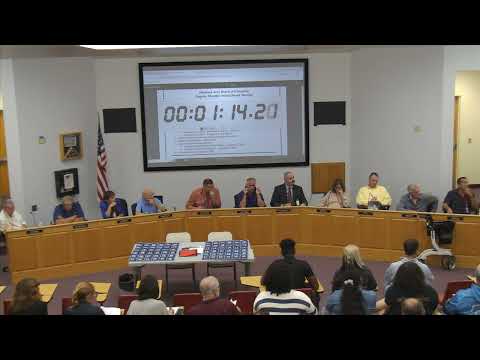
Community members and students pressed the Hazleton Area School District board on the potential to use bilingual students as volunteer translators at school events, arguing the program would improve parent communication without replacing professional translators.
Bob Curry, founding president of the Hazleton Integration Project, told the board that the district regularly lacks enough translators at open houses and parent-teacher nights and asked, "Why can't we use student translators?" He argued using qualified bilingual students would cost the district nothing and would help parents who otherwise face language barriers.
Several students described a structured proposal. Lisonbee Morel, an 11th grader at Hazleton Area Academy of Sciences, said the program would let students "exercise their mother tongue or second language" and improve connections between parents and teachers. Gabriel Garcia Don, a senior, proposed a process where volunteers would be added to an event team page and sign a non-disclosure agreement; he said students would receive volunteer hours and would supplement — not replace — contracted translators. Ivonne Baubuena Marte, a junior, said the district's large Hispanic population makes the program necessary and practical.
Board members and administrators noted legal and contract constraints. One board member said state rules have in the past limited the ability to use students as translators in some classroom settings. The board also said some contracts or federal rules can constrain when students can function in instructional or confidential roles.
The administration offered next steps: a district official asked the student organizers to compile their proposal and email it to the administration so staff could meet with them and explore workable safeguards. The board also noted the district has acquired real-time translation devices for staff to use at events.
The issue was framed as a practical fix to a recurring problem: students and residents urged a pilot approach and safeguards such as NDAs; administrators committed to reviewing contract language and meeting with proponents to assess feasibility and compliance with federal and state rules.
The board did not take formal action on the proposal at the meeting; proponents were invited to provide written materials and meet with district staff for follow-up.