Get Full Government Meeting Transcripts, Videos, & Alerts Forever!
Get email alerts on the Credentialing And Staffing topic
No spam. Unsubscribe anytime.
Industry warns pharmacist‑as‑manager requirement would raise costs, limit access
Summary
Business owners, patients and medical professionals told the Oklahoma Medical Marijuana Authority that a provision in proposed laws (SB 1979) and credentialing rules could increase operating costs, strain staffing and reduce patient access if pharmacists must function as dispensary managers.
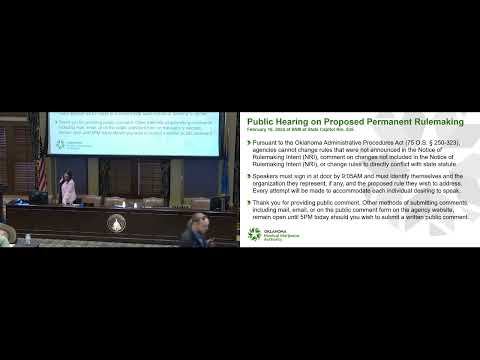
A string of speakers at the Oklahoma Medical Marijuana Authority’s Feb. 16 hearing opposed a proposed change in Senate Bill 1979 that would redefine the dispensary manager role to require a licensed pharmacist.
"It changes the word dispensary manager to mean pharmacist... It means they have to be there to unlock the doors... it specifies that they have to be the one providing the educational benefits," said Joshua Graston, who identified himself as director of operations for multiple companies and director of scientific operations for a national company. Graston said pharmacists receive limited cannabis‑specific education and cited an average pharmacist salary in Oklahoma of $144,000, arguing the requirement would substantially raise costs and could force dispensaries to close or pass costs to patients.
Sheena Wilton, a patient and medical student who described herself as the owner of We Came So Far LLC, told the Authority that requiring a pharmacist would increase prices and push patients back to the black market. "When those prices are increased to the patient, it just drives the black market even more," she said.
Other speakers highlighted practical staffing challenges: finding pharmacists to staff multiple shifts is difficult, and several commenters worried a 90‑day credentialing timeline and fingerprinting rejections would worsen workforce shortages. "If you enforce this employee credentialing, it's absolutely gonna slaughter us," said Daniel Pratt, urging OMA to reconsider credentialing timing to avoid operational disruptions.
Speakers urged the Authority and lawmakers to weigh patient access and workforce realities before enacting pharmacist requirements or onerous credentialing deadlines. The Authority did not take formal action at the hearing; public comment remained open through the deadline for written submissions.