Get Full Government Meeting Transcripts, Videos, & Alerts Forever!
Get email alerts on the Elvis Act topic
No spam. Unsubscribe anytime.
Governor Bill Lee, music leaders unveil "Elvis Act" to curb AI misuse of artists' voices
Summary
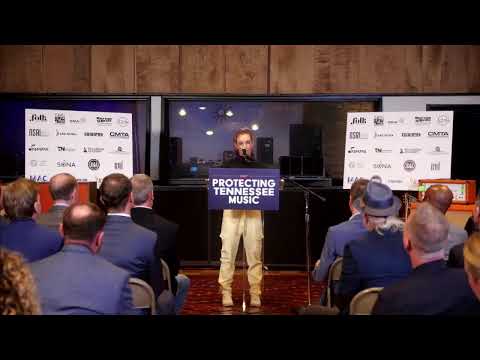
At Studio A in Nashville, Governor Bill Lee announced the Ensuring Likeness, Voice, and Image Security Act — the "Elvis Act" — a proposed Tennessee law to add legal protection for artists' voices against unauthorized use by artificial intelligence. Industry leaders pledged support and legislative sponsors said they will carry the bill through the General Assembly.
Governor Bill Lee announced the Ensuring Likeness, Voice, and Image Security Act — known as the "Elvis Act" — at Studio A in Nashville, saying the measure will add legal protection for an artist's voice alongside existing protections for image and likeness. "We're gonna introduce this key legislation that'll protect voices," Lee said, calling the state's music industry a $6,000,000,000 contributor to Tennessee's economic output.
Why it matters: Industry leaders said advances in artificial intelligence can replicate singers' voices and use recordings without permission, threatening creators' livelihoods and the state's music economy. The Recording Industry Association of America hosted the event and a cross-section of labels, unions and artists turned out to back the proposal.
The governor framed the bill as both symbolic and practical. "This is the Elvis Act," Lee said, telling the audience Tennessee will be "the first in the nation to enact this legislation" and that the state's approach could serve as a blueprint for other states. Senate Majority Leader Jack Johnson and House Majority Leader William Lambert were introduced as the legislators who will carry the legislation through their respective chambers; both urged industry members to contact lawmakers in support.
Artists and industry representatives described concrete harms they said the bill aims to prevent. "It's theft," songwriter Jamie Moore said of AI systems that recreate an artist's voice without permission. Mastering engineers and veteran performers raised similar concerns: "We're not protected with AI anymore," Steve Cropper said, calling for legal safeguards and industry cooperation.
Recording artist Lindsey Elle warned that "AI deepfakes threaten creators' livelihoods, steal their authenticity, and break legitimate bonds between artists and their fans," and said Tennessee's action could set a national example. Mitch Glaser, chairman and CEO of the Recording Industry Association of America, opened the event and framed it as a unified industry effort to help leaders carry the measure into law.
Next steps: Organizers said the bill will be filed with the Tennessee General Assembly and carried by Johnson and Lambert; no formal vote or legislative timeline was announced at the event. Industry participants pledged to mobilize support as the proposal moves through committee and onto the floors of the House and Senate.