Get Full Government Meeting Transcripts, Videos, & Alerts Forever!
Get email alerts on the Legacy Capital topic
No spam. Unsubscribe anytime.
Lawmakers weigh large one-time capital deposits against tax cuts as Legacy Capital Fund negotiations continue
Summary
House and Senate leaders debated how much cash to commit to deferred maintenance and the Legacy Capital Fund (LCF), with the Senate urging fairness across research and regional universities and the House pressing for larger initial deposits; negotiators discussed tradeoffs between one-time projects and recurring tax relief.
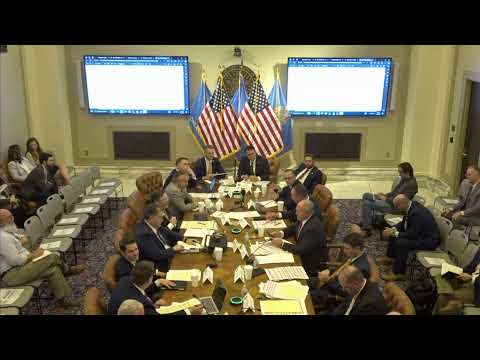
Negotiators at the budget summit discussed how to use available cash to address long-standing deferred maintenance needs and whether to increase deposits to the Legacy Capital Fund (LCF). The Senate and House signaled agreement on the policy purpose of addressing deferred maintenance but remained apart on the amount to deposit and formulas for allocating funds across institutions.
Why it matters: The debate frames a core fiscal choice: spend one-time cash on capital needs (which can be financed through LCF or paid outright) or use reserves to subsidize recurring tax reductions. Proponents of additional LCF deposits argued the fund lets the state finance projects with lower debt service over time and retain liquidity; opponents asked for clarity on project lists, useful life of assets (citing OETA transmitter lives of about 25 years) and whether cash should be prioritized for immediate projects.
Key figures discussed included a Senate number for deferred maintenance around $335 million and a Senate LCF posture of $500 million vs House proposals to add roughly $350 million to LCF in addition to the $600 million initial deposit. Members also flagged the need to allocate funds fairly between major research universities and regional institutions and to avoid commingling restricted federal or purpose-specific accounts with general cash savings.
Next steps: Chairs agreed to reconcile project lists and allocation formulas before finalizing the deposit amount. They also agreed in principle that capital projects with lifespans matching amortization schedules are good candidates for LCF financing and that smaller useful-life items might be paid with one-time cash instead of 20-year LCF amortization.