Get Full Government Meeting Transcripts, Videos, & Alerts Forever!
Get email alerts on the State Budget topic
No spam. Unsubscribe anytime.
Budget talks stall as House won’t give clear veto-override commitment, leaving LCF disputes unresolved
Summary
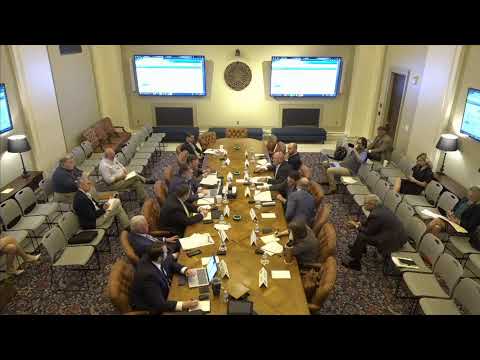
Negotiators for the Oklahoma House and Senate paused FY25 budget talks after the House declined to give a firm commitment to pursue veto overrides, leaving disagreements over LCF capital allocations — including OSU and DPS projects — unresolved.
Unidentified legislator (Speaker 1) pressed House negotiators for a public assurance that the House would attempt veto overrides if the governor vetoes parts of the FY25 budget, saying he "didn't feel like I got a yes or no answer on Friday." Speaker 2, representing the House negotiating team, said the House had negotiated in good faith but that he could not speak for the speaker or the governor on override commitments.
The impasse centers on both process and dollars. Speaker 1 described shifting $154,000,000 in priorities (including an OSU science building and a DPS phase 2 facility) to the House's position and said the Senate needs an assurance that those priorities will be pursued to law rather than left to executive veto dynamics. Speaker 2 said the House's early LCF proposal was $350 million, the Senate initially proposed $125 million and then offered counters (175 million and 76 million in later exchanges), and that staff must reconcile differing accounting approaches — including how interest and recapitalization payments are counted.
Speaker 5 urged technical clarity on how interest and recapitalization flow back into the LCF (Land Conservation/Capital Fund referenced in the discussion), saying recapitalization could add roughly $34,000,000 over time and that a $76 million deposit would, in the House negotiators' view, use outstanding LCF capacity to cover several proposed projects. Speaker 2 and others said Board of Equalization certification and related accounting needed correction and that the parties should reconcile whether interest remains in the fund or reverts to general revenue.
Procedural options were discussed if negotiators could not secure a mutual path forward. Speaker 1 said he had preliminarily gathered "more than enough" signatures to call a concurrent special session again — a mechanism the legislators used previously and that the Oklahoma Supreme Court later upheld — to preserve the Legislature's ability to pursue veto overrides. Speaker 2 said he would entertain a request for a special call only after a budget deal is cut and that both chambers needed to continue negotiating in good faith.
No formal motions, votes, or final agreements were recorded at the meeting. Negotiators agreed to step back, review the positions they held at the end of Thursday (as several speakers suggested), and consider reconvening or returning with clearer commitments and staff reconciliations of fund accounting and project lists.