Get Full Government Meeting Transcripts, Videos, & Alerts Forever!
Get email alerts on the Resilient Tennessee Showcase topic
No spam. Unsubscribe anytime.
DCS rescinds silos as grantees showcase trauma‑informed programs for children and families
Summary
Department of Children’s Services convened Resilient Tennessee grantees to share innovations funded by an ACES grant, highlighting school‑based SEL clubs in Memphis, maternal‑health ACEs toolkits, workforce training and community collectives. Presenters emphasized data collection, partner roles and plans to scale evidence‑based practices.
Department of Children’s Services hosted a Resilient Tennessee grantee showcase bringing nonprofit and school partners together to present programs funded by an ACES innovation grant. Serena Wilson of DCS opened the meeting saying the grant prioritizes both quantitative metrics and qualitative, transformational stories and announced the first learning community would begin in September.
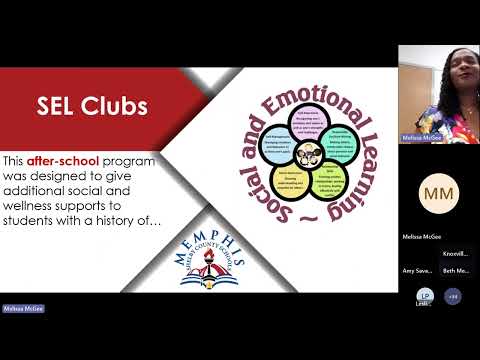
Presenters described a mix of school programs, clinical toolkits and workforce‑facing initiatives. Colette Parks of Memphis Shelby County Schools detailed a district approach that pairs a K–12 SEL curriculum (Rethink), RESET rooms staffed by trained assistants, family wellness centers offering licensed clinicians, and three after‑school SEL “SEO” clubs set to begin after Labor Day (about 20 students per school, ~60 students total). Parks said baseline student outcomes will be collected at program entry to measure change.
Health‑sector efforts included a project by the Metro Drug Coalition to engage OBGYNs in ACEs screening and resiliency work through an ACEs toolkit, academic detailing and continuing education for clinicians. Karen Pershing (Metro Drug Coalition) cited state figures — "1 in 5 pregnant women will suffer from maternal mental health disorders" and Tennessee’s infant mortality near "7 out of every 1,000" births — as reasons to target prenatal care settings.
Other grantees presented workforce and organizational strategies. Omni Family Services’ Hope Collective will teach “hope science” (goal setting, multiple pathways, and agency) to improve outcomes for children and to reduce staff burnout; Omni also plans HOPE navigators, technology tools with Attend (a behavioral platform) and community collectives. Safe and Secure Tennessee described scaling Trust‑Based Relational Intervention (TBRI) through training, organizational coaching and local projects like courthouse safe spaces and nurture kits.
Several statewide training projects were highlighted: AIM HIGH Tennessee will provide endorsement pathways, reflective practice spaces, FAN (Facilitating Attuned Interactions) trainings and a warm line for infant/toddler mental‑health consultation; the Tennessee First 5 Training Institute described a cohort model yielding 45 hours of CE plus reflective supervision but said funding for the next cohort is limited.
Presenters repeatedly emphasized partnerships — schools, health providers, nonprofits and technology vendors — and a shared goal of building sustainable, trauma‑informed systems. No formal votes or motions were recorded; DCS said it will distribute slides and a recording via the grantee mailing list.