Get Full Government Meeting Transcripts, Videos, & Alerts Forever!
Get email alerts on the Budget Approval Conditions topic
No spam. Unsubscribe anytime.
Governor says he will sign budget if leaders preserve closing fund, tribal litigation fund, cap judicial pay and start business‑courts framework
Summary
Meeting with legislative leaders, Oklahoma’s governor urged inclusion of four priorities — a $20 million quick‑action closing fund, preservation of the tribal litigation fund, a roughly 7% cap on district‑court pay increases, and a framework to develop business courts — and said he would not veto the budget if those items are included.
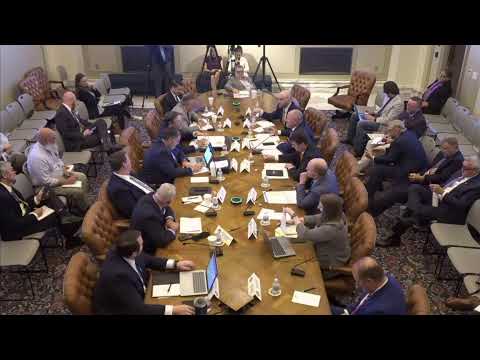
Oklahoma’s governor told House and Senate leaders in a leadership meeting that he would not veto the budget if lawmakers preserved the state’s Quick Action Closing Fund with an additional $20 million, left the tribal litigation fund in place, limited district‑court judicial pay increases to roughly 7%, and included a framework to create business courts.
The governor said the additional $20,000,000 for the Quick Action Closing Fund would be paid only after companies performed under the terms of agreements and that Commerce can be asked to impose time limits on encumbrances. “We’re never gonna let that out the door until that company performs,” he said. He also asked that the existing tribal litigation fund structure remain intact and subject to the joint committee on tribal relations for contract approvals.
The announcement placed clear conditions on legislative negotiators scrambling to finalize the fiscal‑year deal. The governor described the business‑court proposal as a no‑funding, task‑force‑first approach intended to signal Oklahoma’s interest in being a business‑friendly state; he said the pilot would likely include Oklahoma City and Tulsa and that operational and appointment details would be worked out over time.
Lawmakers responded that the governor’s requests were broadly reasonable but asked time for caucus review. House and Senate leaders agreed to continue huddles and to reconvene after staff reconciles budget spreadsheets; they set a tentative reconvening time to finalize outstanding numbers.
Trevor Pemberton, the governor’s general counsel, was named as a point of contact for the business‑court work and related legal questions.
Next steps: leadership directed staff to reconcile spreadsheet differences, to review encumbrance dates for LCF projects and Commerce‑held contracts, and to resume negotiations later the same day. No formal motions or votes were recorded in the transcript of this leadership meeting.