Get Full Government Meeting Transcripts, Videos, & Alerts Forever!
Get email alerts on the Consent Decree topic
No spam. Unsubscribe anytime.
Oklahoma mental health commissioner opposes consent decree, warns of service cuts and high costs
Summary
Mental Health Commissioner Ali Friesen told the Contingency Review Board she cannot approve the Briggs v. Friesen consent decree as drafted, saying it would strip clinicians’ authority, cut jail-based restoration programs for most counties and could cost the state tens of millions; the board moved to table action pending the court’s decision.
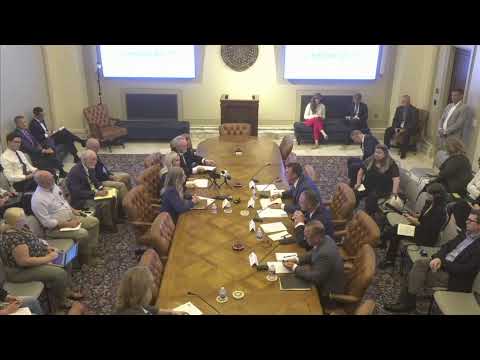
Commissioner Ali Friesen, the state’s mental health commissioner, told the Contingency Review Board on Aug. 28 that she cannot approve the proposed consent decree in Briggs v. Friesen as it is currently written.
Friesen told board members she informed the attorney general in person and by email — most recently on Aug. 14 and again on Aug. 23 — that she had “two nonnegotiables” and that the decree removes the department’s ability to provide jail-based competency restoration services in most counties. “I cannot and will not agree to the consent decree as it is drafted,” she said.
Friesen said the decree shifts clinical decision-making to attorneys and a consultant panel and would, as written, put the department at risk of violating court orders, incurring fines and even exposing officials to criminal prosecution. She cited a conservative cost estimate of approximately $96,000,000 over five years for measures included in the decree, and said that a more expansive interpretation could push costs into the low hundreds of millions. “In its most extensive form ... the financial requirements from the decree could encumber approximately $142,000,000,” she said, adding that in a severe scenario the decree could consume roughly 37% of the department’s annual state appropriated budget in its first year.
Friesen also argued the decree’s structure would curtail existing, evidence-based jail‑based competency restoration programs that the department has used to return defendants to competency. She said those programs have restored 216 lives since January 2023 and that the decree as drafted would limit jail‑based restoration to a Tulsa County pilot and one other unspecified county, leaving 75 counties without that care.
She noted that the legislature has already funded 84 additional forensic beds in Bonita, scheduled to open in June 2025, and said the decree’s bed requirements and consultant discretion could create additional, unspecified operational and staffing costs.
Asked whether the department could make needed improvements without a consent decree, Friesen said yes, describing work plans recently authorized by the attorney general’s office, steps to improve provider requirements and data systems, and the onboarding of a new chief medical officer, Dr. Jason Beaman, a board‑certified forensic psychiatrist, who she said would help lead evidence‑based reforms.
Friesen said the plaintiffs’ counsel and the consultant panel must be removed from clinical decision‑making for any settlement she would consider acceptable and that any settlement must align with state and federal law and avoid additional burdens on taxpayers. She said she would be willing to present those concerns to the federal judge considering the decree.
Unidentified members of the board relayed that the attorney general’s office had notified them that acting on the decree would be premature while the court considers the agreement. Unidentified Speaker 4 moved to table agenda item 7, and Unidentified Speaker 2 seconded; the transcript ends before a recorded vote.
The meeting was primarily an informational hearing: Friesen outlined clinical, legal and fiscal objections to the decree, offered a count of program outcomes and costs, and said she is open to a settlement that preserves clinician authority and limits taxpayer exposure.