Get Full Government Meeting Transcripts, Videos, & Alerts Forever!
Get email alerts on the Advocacy Centers topic
No spam. Unsubscribe anytime.
MNPS officials describe advocacy centers in all 74 elementary schools as alternative to punitive discipline
Summary
Metro Nashville Public Schools officials told the Commission on Children and Youth that advocacy centers and trauma-informed practices now operate across all 74 elementary schools, offering regulation spaces, coaching, and partnerships such as Handle With Care and therapy-dog visits.
Metro Nashville Public Schools officials described an expanding network of "advocacy centers" in every elementary school that district leaders say aim to support students——s social-emotional needs and reduce punitive discipline.
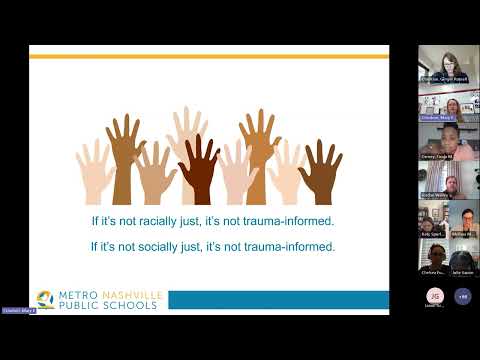
Dr. Mary Sonoburi, who said she leads MNPS——s trauma-informed schools initiative, told the Commission on Children and Youth the district has made the work a universal, Tier 1 effort across elementary buildings and provides training, coaching and classroom supports. "This work is about resilience. It's about voice and choice," she said.
Sonoburi said the initiative includes a structured coaching model: coaches receive a six-day onboarding training, monthly site visits and implementation support guided by a fidelity checklist so evaluation findings reflect actual implementation. "We want to make sure that our evaluation is valid, that the intervention was actually implemented," she said.
The district distributed regulation kits and built regulation "peace corners" in classrooms; Sonoburi said earlier this year MNPS passed out about 1,750 regulation tool kits to elementary teachers. She described advocacy center coaches as "emotional regulation coaches" who provide preventative strategies for whole classrooms, short on-the-spot resets for dysregulated students and restorative accountability actions when harm occurs.
"The advocacy center was a place, a safe space where the kids could come if they felt like it," said Latonya Williams, advocacy coach at Neely's Bend Elementary, describing year-one returns from virtual learning and the shift to more classroom push-in and scheduled check-ins. Williams said the center helped many students remain in class and also provided a place for teachers to take brief breaks.
Tanya Kearney, another advocacy coach, described the role——s reach beyond students to support adults in the building. She recounted calming a child by phone the night before and meeting that child at the school door the next morning to reinforce regulation techniques: "He said, 'I am okay. I am okay.'" Tatiana Beatty, an advocacy coach at Schwab Elementary, highlighted affirmations and one-on-one writing exercises that help students express and then regulate intense feelings.
Leaders also flagged partnerships and tools used in centers: an animatronic breathing buddy called "Bouncy," visits from therapy dogs at some sites, mindfulness sound immersions and a district partnership with the Metro Nashville Police Department for a Handle With Care notification system. Sonoburi clarified that Handle With Care alerts notify schools that a student experienced a potentially traumatic event outside school, but do not include incident details: "We do not know what happened. We do not need to know what happened," she said.
District staff said the advocacy center model intentionally interrupts traditional office-punishment processes: restorative or student-designed accountability replaces referrals in most cases. Sonoburi said evaluative work is ongoing and that fidelity checks and coaching visits are intended to produce measurable program results.
Slides and supporting materials from the presentation will be circulated to attendees after the meeting, and presenters said they would provide a playbook and further materials for the Commission and community partners.
The session closed with organizers thanking presenters and confirming follow-up materials would be shared before the next scheduled convening.