Get Full Government Meeting Transcripts, Videos, & Alerts Forever!
Get email alerts on the Hope Framework topic
No spam. Unsubscribe anytime.
Presenter urges framing 'PCEs' as primary to child development, not just mitigation of ACEs
Summary
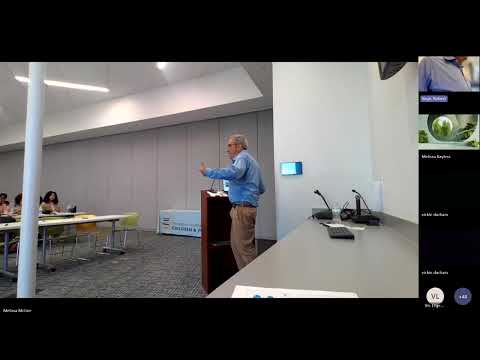
At a Commission on Children and Youth session, the presenter described the HOPE framework and argued that Positive Childhood Experiences (PCEs) should be treated as primary developmental requirements that help children process adversity, citing international examples and state survey evidence.
The session convened by the Commission on Children and Youth focused on the HOPE framework and the role of Positive Childhood Experiences (PCEs) in child development. Presenter (Speaker 2) said the field’s view has shifted: while PCEs “mitigate ACEs,” he added, “PCEs are primary,” arguing that relationships, safe environments and opportunities for engagement set the conditions for development and resilience.
Presenter (Speaker 2) illustrated the point with anecdotal and research evidence. He described an Aboriginal preschool teacher in Australia who, after learning about HOPE, emphasized relationships and community connections and saw changes in children’s emotional growth. He also cited analyses done with CDC collaborators showing that adults who identified as lesbian or gay reported fewer PCEs than their straight peers in four states, and that gender-minority youth who have PCEs show reductions in several risky outcomes.
On practical adoption, the presenter outlined how organizations can build capacity: leadership-driven messaging, basic staff awareness, and targeted facilitator training so organizations can certify internal HOPE facilitators. He pointed to the San Diego County YMCA as an early large adopter, noting it has multiple branches and trained facilitators across its staff.
The presenter emphasized that focusing only on deficit measures (ACEs) misses a policy opportunity: building PCEs for all children aligns with parents’ hopes and the kinds of supports that schools, after-school programs and community groups can provide. He also described narrative-therapy–style techniques used in HOPE facilitator training that ask clients to recall times when “things worked” to surface supports and strengths.
The meeting closed with resource guidance: the presenter directed attendees to the HOPE website (positiveexperience.org) to find facilitators and champions by state and said organizers would circulate the recording and a written summary.