Get Full Government Meeting Transcripts, Videos, & Alerts Forever!
Get email alerts on the Resilient Tennessee topic
No spam. Unsubscribe anytime.
Resilient Tennessee summit spotlights relational health, hope science and family partnership
Summary
The Tennessee Commission on Children and Youth convened a Resilient Tennessee summit bringing national and state experts to Nashville to outline a new strategic plan, review trauma‑informed practice work and stress programs to strengthen helpers, family engagement and data-driven approaches to child well‑being.
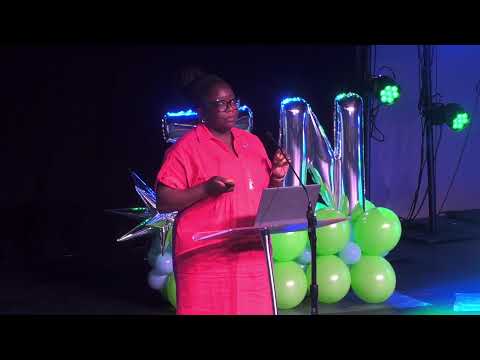
The Tennessee Commission on Children and Youth hosted a Resilient Tennessee Collaborative summit that drew state and national experts to discuss strategies to strengthen relational health, nurture hope and expand family partnership across systems.
The commission’s lead presenter opened the gathering by describing the agency’s mission—established by the Tennessee General Assembly in 1987—and laid out four strategic priorities for the Resilient Tennessee initiative: aligning funding for child‑focused infrastructure and programming, championing policy that supports positive childhood experiences, expanding multisector engagement (including business, faith and civic partners), and improving statewide data collection and analysis.
Speakers framed the summit around frontline practice and systems change. Doctor Junlei Lee of the Harvard Graduate School of Education urged attention to “relational health,” using video and field examples to show that brief everyday interactions — five to ten seconds between helpers and children — can meaningfully support resilience. Doctor Angela Farris of the University of Oklahoma summarized research that treats hope as a teachable cognitive process defined by three components — goals, multiple pathways and agency — and described evidence tying higher hope scores to reduced depression and better school outcomes.
Millie Sweeney of FREDLA highlighted family partnership as a continuum ranging from involvement to full family‑driven governance, and she outlined programmatic steps that agencies can take to make family voice meaningful, such as training, meeting accommodations, stipends and including family members in governance and hiring.
State and regional leaders described initiatives that translate practice into systems. Judge Sheila Calloway previewed the Nashville Youth Campus for Empowerment, a trauma‑informed juvenile justice campus planned for Brick Church Pike that will include a 24‑hour assessment center, respite beds, therapeutic visitation spaces and pretrial housing. Federal and national work was represented by Doctor Melinda Baldwin of SAMHSA, who summarized the task force’s work to standardize terminology, build a taxonomy of trauma‑informed components and develop measurement approaches; Baldwin also described trauma‑informed training pilots in disaster recovery with FEMA.
Collective impact models and local care coordination programs were also showcased. United Way of the Mid‑South presented Driving the Dream, a Shelby County network of care coordination hubs and a ~160‑partner referral network designed to reduce repeated retelling of client stories and connect households to services. The STRONG Accountable Care Community described a regional, cross‑sector agenda focused on measurable goals from early childhood through early adult economic independence.
Public‑health priorities received sustained attention. The Tennessee Department of Health outlined ACEs and PCEs data, care‑coordination resources, evidence‑based home visiting and WIC modernization work, and warned about falling childhood immunization coverage in some counties.
Organizers said summit materials, slides and recordings will be shared with participants and that the Resilient Tennessee strategic plan and related resources will be posted later this summer.