
Board accepts Shelby County appellant’s evidence, deems tax‑relief filing timely
Get AI-powered insights, summaries, and transcripts
Subscribe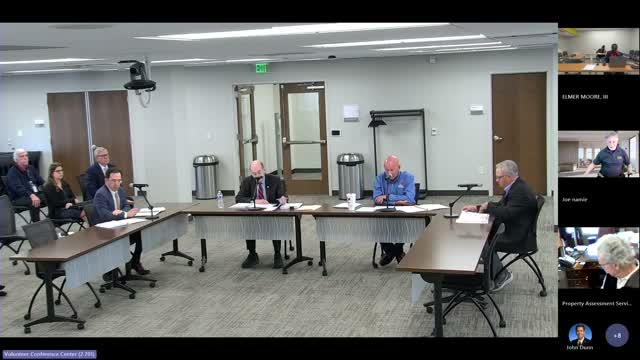
Summary
After oral argument, the Tennessee State Board of Equalization voted to accept Joseph Namy’s claim that his application for 2022 tax relief was mailed timely and to deem the application filed, reversing the prior denial based on a missed April 5 deadline.
The Tennessee State Board of Equalization on Oct. 14 voted to accept oral-argument evidence from Joseph Namy and deem his application for 2022 property-tax relief filed timely, overturning the practical effect of an administrative judge’s denial based on a missed April 5, 2023 deadline.
Namy told the board he mailed his application Dec. 24, 2022, and said he had "done everything in my power to comply" and would have cured any deficiency had he been notified. "I did everything in my power to comply," Namy said during his four-minute oral argument, adding he filed a check and the required paperwork in person when he discovered the problem.
The administrative judge had found Namy’s application was not received by the April 5 deadline and had affirmed the assessor’s denial of tax relief. During deliberations, a commissioner raised possible statutory relief options, citing the code sections discussed in the administrative record, and asked why a mailing-specific provision had not been applied. The transcript records board members debating whether to remand the case to the ALJ, to delegate further review to staff for adoption at the next meeting, or to accept Namy’s evidence as establishing timely filing.
Vice Chair David Lillard said he sympathized with Namy but cautioned about precedent, noting taxpayers ordinarily bear the burden to verify timely receipt. "From that standpoint, I just, I don't know that I'm in a position to support relief in this case, but that's my own personal opinion," Lillard said while urging care about future precedent.
After discussion about statutory provisions addressing mailed filings, a board member moved to accept Namy’s position and deem the document filed timely; the motion was seconded and adopted by voice vote. The board thanked Namy and the assessor’s office for participating; the transcript records no recorded dissents.
The record shows staff had outlined the board’s options earlier: remand to the ALJ for further factfinding, delegate review subject to final adoption at the next meeting, or decline review. The board chose to accept the filing as timely rather than remand or delegate. The administrative record, statutory citations, and the board’s order should be consulted for precise legal effect and any next steps (the board did not specify further implementation tasks during the meeting).