Get Full Government Meeting Transcripts, Videos, & Alerts Forever!
Get email alerts on the Septic Program Expansion topic
No spam. Unsubscribe anytime.
Harney County proposes fee‑based on‑site septic service expansion to northeast Oregon counties
Summary
Harney County staff proposed expanding its fee‑based on‑site septic program to provide DEQ on‑site services for Baker, Union and Wallowa counties after a state vacancy, estimating about $240,000 in gross fees and roughly $50,000 net to county reserves after startup and operating costs.
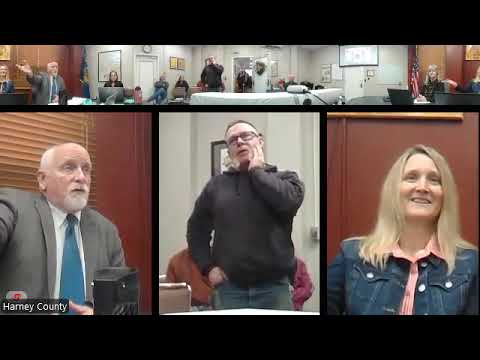
Jesse Barnes, Harney County’s on‑site program manager, told the county court on Dec. 18 that the Oregon Department of Environmental Quality’s regional on‑site specialist for northeast Oregon has retired and the state does not plan to fill the position. Barnes proposed Harney County provide fee‑based on‑site septic services for Baker, Union and Wallowa counties under individual intergovernmental agreements (IGAs), arguing local coverage would shorten permit wait times and support regional housing and development.
Barnes said the program is already run on a fee basis and contractors, planning departments and local officials in the three jurisdictions have expressed interest. She estimated approximately $240,000 in annual permit fees could come to Harney County from providing that coverage; after personnel, vehicle and operating expenses she anticipates roughly $50,000 could flow into reserve funds. Barnes said the county would need to hire at least one additional environmental health specialist who would reside in northeast Oregon to provide coverage and build local relationships.
Barnes outlined steps required before services could begin: each jurisdiction must adopt ordinances and a fee schedule (the state fee schedule was noted as the likely template), sign an IGA with Harney County, and agree on office/vehicle and oversight arrangements. She said the state has provided a template IGA reviewed by state attorneys, which could streamline agreements. Barnes also noted modest startup funds are available in the current budget (about $15,000 unallocated in on‑site/environmental health) to cover early costs.
Commissioners and other speakers questioned demand volatility, fee sustainment if permits decline, timing of ordinance adoptions, and whether the county should revise internal budget lines if it hires new staff. County officials said transfers of existing state funds from unfinished projects could be routed to Harney County after an IGA and that typical county onboarding for a jurisdiction can take from 45 days up to several months depending on local action. Barnes and supporters urged the court to continue discussions, assist with letters of support for federal grants if needed, and let staff proceed with outreach and ordinance drafting.
Next steps the court identified were continued talks with the interested counties, follow‑up on available state funds for open projects, and revisiting budget and personnel lines as the IGAs and ordinances progress. The court did not take a formal vote to authorize service provision on Dec. 18 but encouraged staff to advance planning steps.