Get Full Government Meeting Transcripts, Videos, & Alerts Forever!
Get email alerts on the State Budget Attorney General topic
No spam. Unsubscribe anytime.
Legislative panel hears AG budget: added Medicaid‑fraud attorney, IT upgrades and $8M litigation fund proposed
Summary
The Appropriations — Education & Environment Division heard testimony on the Attorney General's budget (House Bill 1003). The committee agreed to put multiple items into the House version, including a Medicaid Fraud Control Unit attorney FTE ($343,000), IT upgrades (e-prosecutor and SAVIN), and a proposed $8 million litigation fund, while advocacy groups urged more human-trafficking grant match funding.
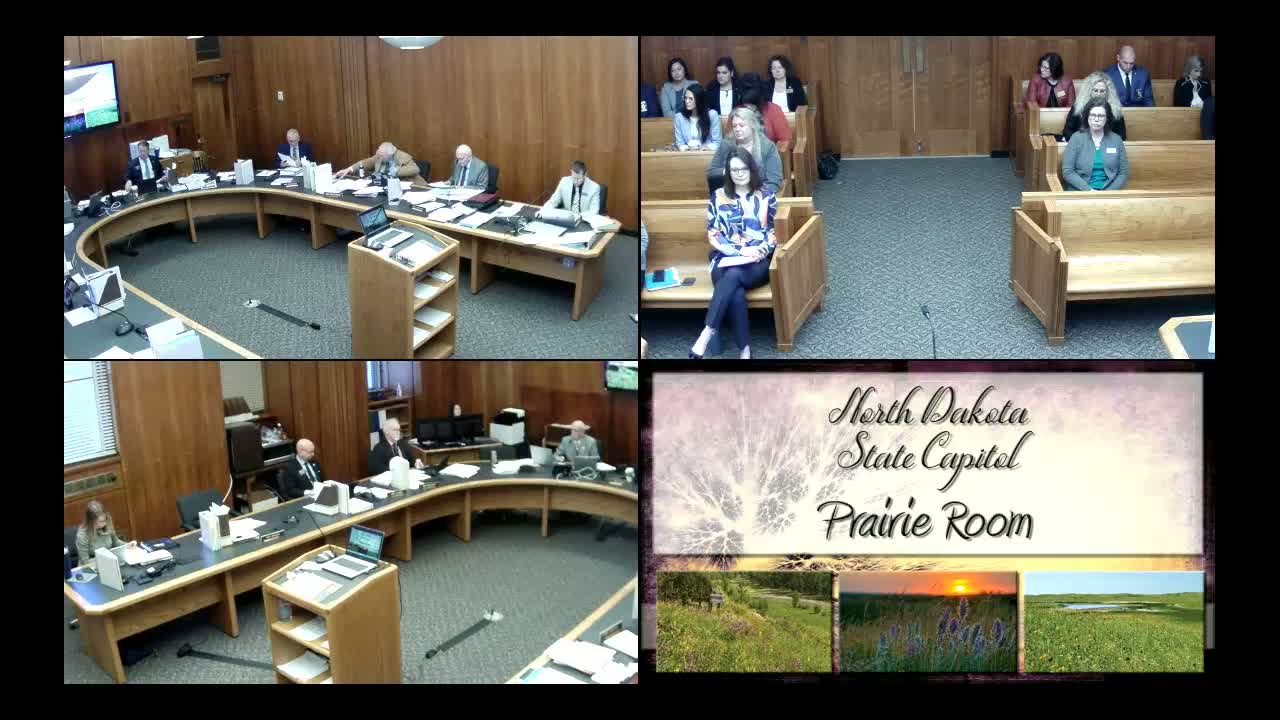
Chairman Nathy convened the Education and Environment Division hearing on House Bill 1003 and previewed a new long-sheet budget worksheet the committee will use to build the House version of the Attorney General's budget.
Assistant Attorney General Claire Nesse summarized the office's written testimony and division-level asks, including a request to add an attorney for the Medicaid Fraud Control Unit (MFU) and several reclassifications and vacancy-fill requests. "Since its inception in August of 2019, it's recovered approximately $2,850,000 and collected almost $900,000," Nesse said of the MFU, noting the unit receives a 75% federal cost share. MFU director Marina Spahr explained the difference: "A recovery is any money that Mifuku recovers ... any money that Mifuku recovers whether it be from a global settlement, a state civil settlement, or a criminal judgment," while collections reflect cash actually in hand.
Committee counsel Levi described a methodology shift for new and vacant FTE funding: rather than maintaining a central statewide pool in OMB, the leadership proposal places a new-and-vacant FTE line within each agency's budget so agencies manage their own vacancy funds. Representative Martinson objected, saying a statewide pool enabled agencies to shift vacancies when needs changed; staff answered that some vacancy savings are one‑time and some positions are funded from special funds and cannot be reallocated.
On staffing, the committee and AG's office discussed long-term vacancies that have lingered 18–32 months in specific positions and the constraints the office faces in filling them, including non‑recurring vacancy savings and special-fund restrictions. The AG's office said it is using reclassification where possible and cited difficulties in competing with county and federal prosecutor pay scales.
The committee heard several program updates. Lonnie Grabowska, director of the Bureau of Criminal Investigation (BCI), said the bureau has hired three agents to serve tribal areas and has worked to secure Special Law Enforcement Commission authority and regional task forces; "We have hired all 3 of them," he said. Crime-lab director Jennifer Penner reported that three of four recent forensic FTE have been filled, the latent-print lead is authorized for casework, and firearms work is nearing case acceptance pending final procedural validation.
The AG's office flagged several IT projects requiring investment: replacement/upgrade of the document management system (JustWare → e-prosecutor) with increased maintenance costs (committee noted a $1.1 million line), reprocurement or replacement of the SAVIN victim-notification system (one-time ~$1.5 million shown on the sheet), and future replacement of the jail-management system (vendor support for Premier One ends in 2027).
The office also explained an $8 million request to the state litigation fund, which the AG said covers costly outside counsel and experts for multi-state or constitutional litigation. "Constitutional litigation gets very expensive very quickly," Nesse said, describing ongoing matters the fund would support.
Advocates and service providers testified in support of increasing the AG's human-trafficking and victim-service funding. YouthWorks (testimony by Amy) requested additional match funding, saying a $655,000 state match could unlock roughly $3,000,000 in Office for Victims of Crime federal funds over three years; the organization urged a human-trafficking appropriation of $1.6 million. Central Dakota Forensic Nurse Examiners described 484 victims served in the last biennium and results from a domestic‑violence pilot (62 victims in ten months). Survivor testimony (Piper Bjornson) and 31A Project remarks emphasized the role of grant funding in recovery, housing and reintegration.
At the close of the hearing the chairman proposed moving several items into the House version for committee consideration next week: the MFU attorney FTE (approx. $343,000), a paralegal reclassification (~$30,000), salary-equity adjustments (~$321,000), funding for state crime-lab equipment and maintenance (~$192,000), e-prosecutor IT funding (~$1.1 million), one-time SAVIN and jail-management replacements, and an $8 million litigation fund. He also asked staff to add a $655,000 one‑time YouthWorks match and a previously prepared amendment to support retired K-9 care (~$110,000). The committee did not record a final roll-call vote on these adjustments during the hearing; members requested follow-up materials and scheduled return consideration.