Get Full Government Meeting Transcripts, Videos, & Alerts Forever!
Get email alerts on the Municipal Aggregation topic
No spam. Unsubscribe anytime.
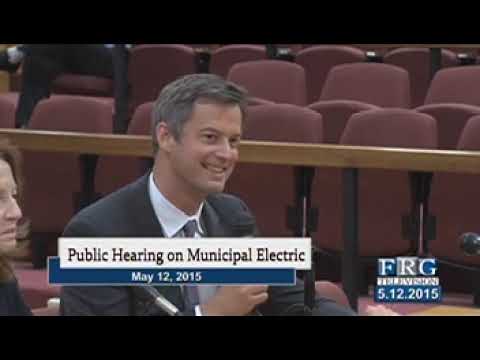
Fall River holds public hearing on municipal electricity aggregation; consultant outlines opt-out plan
Summary
At a public hearing, Good Energy’s Philip Carr briefed the council and residents on a regional municipal aggregation plan that would automatically enroll (opt-out) eligible households to secure a fixed generation rate; estimated residential savings roughly $120–$130 per year. City and state reviews remain pending.
A public hearing at the Fall River City Council focused on a municipal electricity aggregation plan intended to pool the buying power of 16 communities to secure lower generation rates for residential and small-business customers.
Philip Carr, business development director for Good Energy, said the regional effort—coordinated through the Southeast Regional Planning & Economic Development District and subject to review by the Massachusetts Department of Energy Resources (DOER) and the Department of Public Utilities (DPU)—aims to get plan approval by Aug. 31 and issue a bid in September. Carr told the council the bulk purchasing approach could translate to about $120–$130 in annual savings for the average homeowner, though final prices will be set in the competing bids. He noted market volatility and said summer generation rates can be lower while rates traditionally rise in November.
Carr described the program as an automatic opt-in with a 30-day opt-out period mailed to eligible households and small businesses that are on basic service (customers already using a third‑party supplier would not be mailed the offer). He said outreach and a multilanguage marketing campaign would accompany the successful bid so residents understand rates, term length, and any termination-fee risk from previously signed third‑party contracts.
Councilors asked technical questions: whether the price quote covers generation only (Carr: yes, delivery and other utility charges remain on National Grid bills), how the plan affects customers with rooftop solar or net metering (Carr: only the portion obtained from the supplier would be subject to the new rate), and whether the city would retain any portion of savings (administration: not presently; a few other member communities have authorized limited uses in some circumstances). Carr said Good Energy will provide consumer assistance and recommend residents check any early‑termination fees on existing contracts before switching.
The council also heard an opponent question whether the city might redirect savings to municipal uses; council and staff representatives said the regional procurement and the current plan prioritize directing savings to residents and small businesses and that the selection of Good Energy followed a regional competitive process with member‑community input.
The hearing closed after public remarks. Next steps identified by presenters include DOER consultation, DPU filings, and the planned bid process if approvals are received on the timetable Carr described.