Get Full Government Meeting Transcripts, Videos, & Alerts Forever!
Get email alerts on the Riparian Funding topic
No spam. Unsubscribe anytime.
Bill to double riparian weed‑control funding draws broad support over compact, conservation concerns
Summary
LB145 would raise the Noxious Weed and Invasive Plant Species Assistance Fund from $3 million to $6 million to support riparian vegetation management across Nebraska. County weed managers, NRDs, conservation groups and agricultural organizations said funding gaps threaten progress controlling phragmites and meeting Republican River Compact obligations.
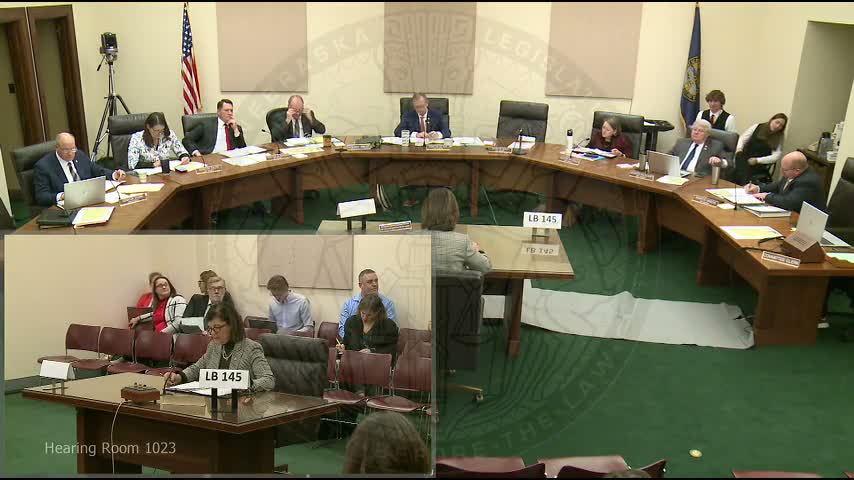
Senator Theresa Ibach (District 44) introduced LB145 to increase funding for the Noxious Weed and Invasive Plant Species Assistance Fund from $3,000,000 to $6,000,000 beginning fiscal year 2025‑26, and to require the Department of Agriculture to implement the statute as the Legislature intended. She said the program helps manage vegetation in stream floodplains and tributaries and noted the Department did not distribute grants in the most recent cycle though funds had been legislated.
Testimony in support was extensive and bipartisan. Don Batie (Nebraska Farm Bureau, Ag Leaders Working Group) and other agricultural leaders cited the high costs of treating phragmites and similar riparian invasives and warned that funding lapses put Nebraska at risk of failing interstate water obligations under the Republican River Compact. Batie remarked that at one point “the spray phragmites was running about $1,000,000 a mile,” a figure later questioned in testimony as imprecise; committee witnesses agreed cost estimates vary by site and method.
Brent Meyer (Lancaster County Noxious Weed Superintendent) and other county and NRD representatives urged steady, predictable appropriations, recommended that future funds be earmarked to the riparian assistance fund, and proposed a scoring committee for grant awards. Mike Reed (riparian task force chair) said the Department of Agriculture had placed the grant program under internal review and that there is no timeline for resuming awards; he warned that losing matching partner funds and coordinators endangers long‑term projects.
Conservation groups including The Nature Conservancy described ecological, recreational and economic benefits and warned that inconsistent funding undermines early detection and rapid response. County speakers explained common cost‑share models and that many projects rely on a mix of state, federal and local funding.
No opponents were recorded for the oral hearing and staff reported 21 letters of support submitted online. Sponsor and proponents asked the committee to advance the bill and to consider statutory earmarks or amendments to ensure appropriations are used for riparian grant awards rather than general fund sweeps.