Get Full Government Meeting Transcripts, Videos, & Alerts Forever!
Get email alerts on the LB289 topic
No spam. Unsubscribe anytime.
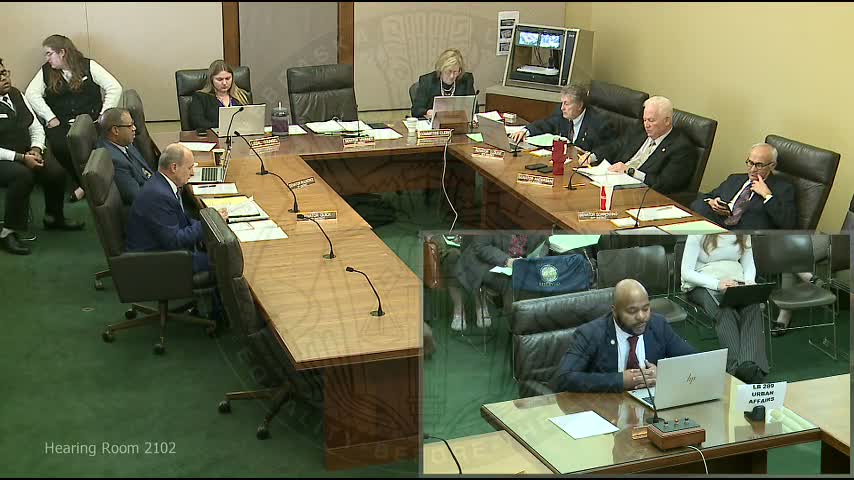
Panel hears bill to let small villages reduce board size, broaden LB840 eligibility and allow councils to serve as Boards of Adjustment
Summary
LB289 would give villages the option to reduce boards from five to three, remove percentage caps on LB840 retail funding so municipalities may decide local eligibility, and permit 1st- and 2nd-class city councils to serve as Boards of Adjustment. Supporters say options help understaffed communities; senators raised open‑meetings and separation‑of‑powers concerns.
Senator Terrell McKinney introduced LB289 as a municipal bill brought by the League of Nebraska Municipalities that combines three distinct changes for smaller communities.
"Firstly, this bill allows villages to have three village board members with the vote of the people," McKinney said. He described two other provisions: removing statutory limits that currently restrict how much LB840 program revenue may go to retail trade, and allowing city councils in first‑ and second‑class cities to serve as Boards of Adjustment by local choice.
Greg Butcher, city administrator of Seward, testified he supports removing the 40% and 20% caps on LB840 retail spending, saying the limitations have hampered development in older downtowns and that LB840 has been a primary driver of small retail and entrepreneurship in many communities. Robert Costa, a community planner for Yutan, and Lynn Rex of the League of Nebraska Municipalities also spoke in favor, citing committee fatigue and difficulty finding citizen volunteers to serve on boards and commissions.
Committee members pressed supporters on risks: one senator asked whether large retail chains could "dominate" local markets and crowd out mom‑and‑pop businesses; another raised separation‑of‑powers concerns if councils serve a quasi‑judicial function. Lynn Rex acknowledged those issues, noting the measure is optional and that training and safeguards would be available; she also pointed to constitutional limits on lending state credit and the voter‑approval mechanism that underpins LB840 programs.
No formal committee votes were taken at the hearing. Proponents asked the committee to consider local flexibility given recruitment challenges in small municipalities and to preserve voter oversight where required.
If advanced, the bill would require municipalities and voters to decide whether to adopt the village‑board, LB840, or Board‑of‑Adjustment options.