Get Full Government Meeting Transcripts, Videos, & Alerts Forever!
Get email alerts on the LB231 topic
No spam. Unsubscribe anytime.
Uniform Special Deposits Act proposed to protect escrow‑style accounts from creditor claims
Summary
LB 231 would enact the Uniform Special Deposits Act in Nebraska to define and protect special deposits (escrow‑style or contingent‑purpose accounts), limit creditor remedies while the contingency remains unresolved, and clarify treatment of such funds in bankruptcy; proponents said the change resolves legal uncertainty that has discouraged use of these accounts.
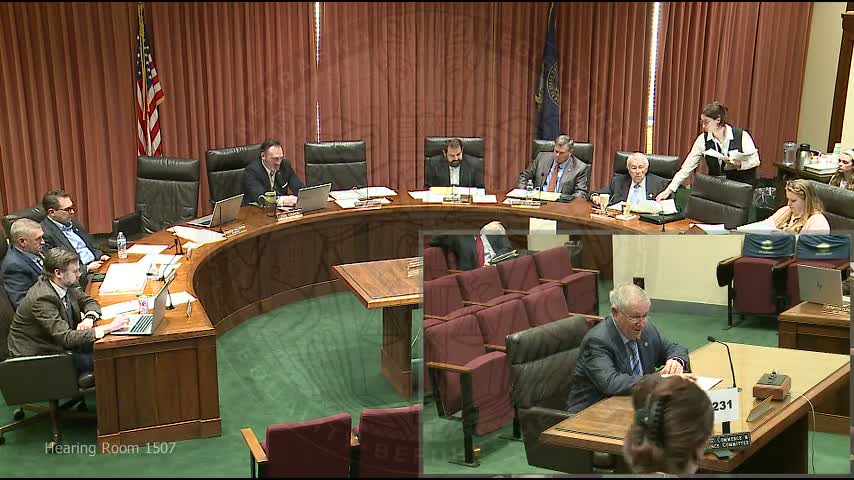
Senator Bob Hallstrom introduced LB 231, the Uniform Special Deposits Act drafted by the Uniform Law Commission, telling the committee the measure clarifies the status of certain escrow‑style accounts and reduces legal uncertainty that has limited their use.
"Special deposits are banking products that have different characteristics than other deposit accounts like checking or savings deposits," Hallstrom said. "They are a type of protected escrow account established for a particular purpose, and a beneficiary's entitlement is determined only after a specified contingency has occurred."
Proponents described specific problems the Act is intended to cure. Don Swanson, a commissioner on Nebraska’s Uniform Law Commission delegation, gave four concrete examples where existing law failed to protect funds intended for a future purpose — tenant security deposits, insurance repair funds held in trust accounts, land‑contract reserves, and subcontractor payments — and explained how the Act would treat beneficiary interests so that properly structured special deposits are not swept into a depositor’s bankruptcy estate.
The bill also contains creditor‑protection rules, limits on injunctions that might freeze special deposits, and an opt‑in design so depositors and institutions elect to use the special‑deposit framework. Senator Hallstrom noted an amendment (AM30) revises terminology to use "financial institution" instead of "bank" consistently in the draft. He also told the committee that section 13 would terminate a special deposit five years after the date it was first funded unless the parties agree otherwise.
Supporters from the Nebraska banking and credit union communities urged the committee to advance the bill, saying clearer law will allow special deposits to be used more widely in escrow, settlement and real‑estate transactions with predictable legal outcomes. Committee members asked how broad permissible purposes could be and whether certain speculative or improper uses could be blocked; proponents said the statutes preserve fraudulent‑transfer protections and require specificity and lawful purpose.
The hearing closed with proponents’ testimony and committee questions; no opponents appeared.