Get Full Government Meeting Transcripts, Videos, & Alerts Forever!
Get email alerts on the Economic Development topic
No spam. Unsubscribe anytime.
Nebraska bill would lift airport-distance restriction to broaden Inland Port Authority development options in North Omaha
Summary
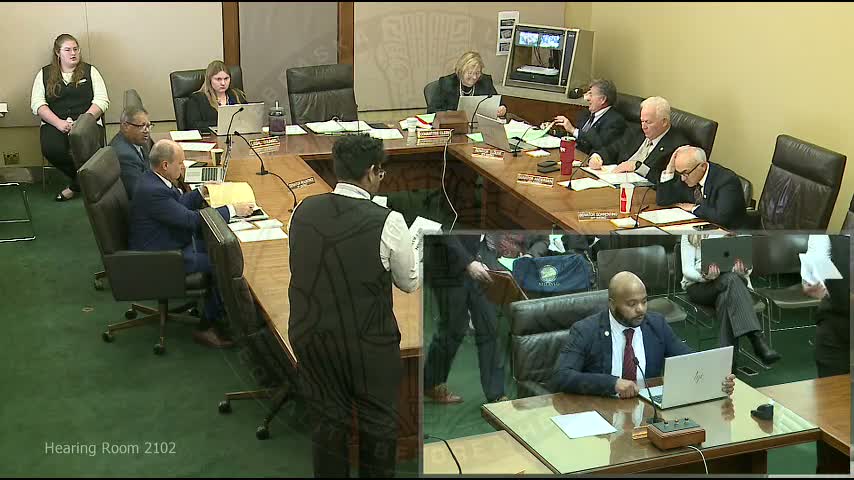
LB290 would remove a two-mile-from-the-airport restriction on Economic Recovery Act grants administered by the Omaha Inland Port Authority, proponents told the Urban Affairs Committee, arguing the change reduces potential displacement and gives the board more site flexibility amid a reported funding gap.
Senator Terrell McKinney told the Urban Affairs Committee that LB290 aims to give the Omaha Inland Port Authority more geographic flexibility for Economic Recovery Act projects by removing a two-mile-from-airport requirement. "These issues include environmental, potential displacement, and funding," McKinney said, explaining the restriction prevented the authority and grantees from considering viable alternatives within the authority's boundaries.
Proponents from the Inland Port Authority said the two-mile constraint limited site options and could force projects into areas with environmental cleanup costs or residential displacement. Jake Hoppe, a board member and developer, said the language change would provide "flexibility" to pursue sites still intended to "impact North Omaha" without unnecessarily displacing residents. Daviell Phillips, vice chair of the Inland Port Authority, told senators the authority encompasses about "3,000 acres" with roughly "2,000 acres" potentially buildable and that vacant land along North 24th and 30th Streets could be redeveloped with less displacement risk.
Senators pressed witnesses on funding and timelines. McKinney said the project's initial money came from federal sources that were later swapped for state Economic Recovery funds and that the grantees currently report a funding shortfall he described as "like a 100,000,000," while noting the legislature had committed about $90,000,000. To bridge gaps, the Inland Port had voted to issue a predevelopment grant while it completes strategic planning and due diligence.
Supporters said the bill would provide optionality during site selection, not an automatic expansion into downtown areas—the text would also prohibit grant use in downtown metro-class areas—while critics in questions emphasized the need for maps, financial specifics and displacement studies. The committee did not vote on LB290 at the hearing; senators asked for additional detail and maps to clarify the geographic and fiscal implications.