Get Full Government Meeting Transcripts, Videos, & Alerts Forever!
Get email alerts on the Municipal Governance topic
No spam. Unsubscribe anytime.
Bill would let small Nebraska villages shrink boards and give cities flexibility on retail aid and adjustment boards
Summary
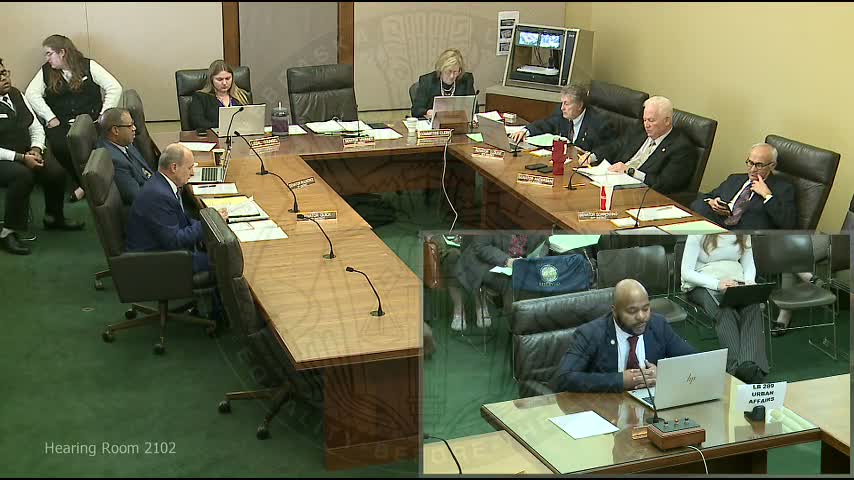
LB289 would let villages vote to reduce their board size to three, allow municipalities greater discretion in using LB840 economic development funds for retail projects, and give some cities the option to have their city council serve as the board of adjustment, advocates told the Urban Affairs Committee.
Senator Terrell McKinney, who introduced LB289 on behalf of the League of Nebraska Municipalities, told the Urban Affairs Committee the bill bundles three municipal-government changes aimed at easing governance in small communities and giving localities more discretion over economic development dollars. "This bill allows villages to have... three village board members with the vote of the people," McKinney said, adding that the measure also would give municipalities more flexibility over the use of LB840 funds and permit city councils of first- and second-class cities to constitute boards of adjustment.
Greg Butcher, city administrator of Seward, focused on the LB840 provision, walking the committee through the program's history and its limits on retail spending. He told senators LB840 originally constrained retail expenditures to "40% of revenues generated each year" and a separate five-year limit of "20% of revenues" to guard against big-box domination, and argued removing those caps will let municipalities tailor investments to local needs. "LB 289's provisions would remove the 40% and 20% restrictions on LB840 revenues going to retail trade," Butcher said, adding that municipalities need flexibility to attract businesses and jobs.
Robert Costa, community planner for Yutan, told the committee smaller places are experiencing "committee fatigue" and sometimes appoint a single person to multiple boards; he said section 5 of LB289 would ease that pressure by offering the option for councils to serve as boards of adjustment. Lynn Rex of the League of Nebraska Municipalities framed the changes as practical adjustments for recruiting volunteers and noted the constitutional history behind LB840-authorized plans.
Some senators raised concerns about local retail decisions favoring large chains over small independent businesses. One senator warned that allowing big retailers could lead to "no more mom and pop stores" in some downtowns. Supporters countered that LB840 programs have safeguards—city councils, citizen advisory review committees and voter approval—so local oversight would remain.
The committee did not vote on the bill during the hearing; testimony was largely supportive, with municipalities and the League urging flexibility while senators sought assurances about open-meetings obligations and separation of powers when councils act as quasi-judicial boards.