Get Full Government Meeting Transcripts, Videos, & Alerts Forever!
Get email alerts on the Overdose Prevention Centers topic
No spam. Unsubscribe anytime.
State working group briefs Portland committee on overdose-prevention center study; no immediate policy decision
Summary
Gordon Smith, director of opioid response for the governor's office, told Portland’s HHS & Public Safety Committee the legislature-funded working group will deliver an interim report Feb. 15 after studying U.S. and international overdose-prevention centers, identifying barriers and possible Maine-specific approaches; Smith emphasized federal legal risk and the governor’s current preference for treatment investments.
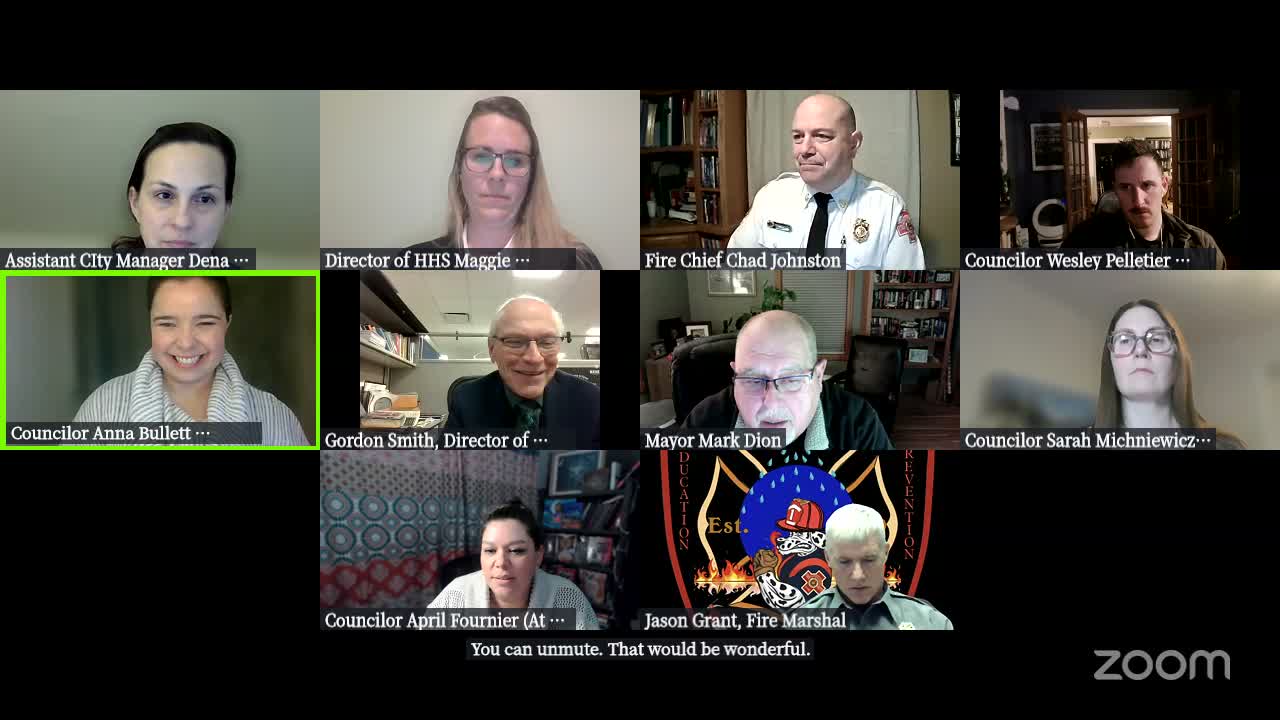
Gordon Smith, director of opioid response in the governor’s Office of Policy and Innovation, briefed the Portland Health & Human Services and Public Safety Committee on a state working group studying whether and how to authorize harm‑reduction or overdose‑prevention health centers in Maine.
Smith said the 15‑member working group — which includes people with lived experience, clinicians, public‑safety representatives and municipal officials — has met four times and is compiling international evidence, site visits and expert testimony. The legislature directed the group to "evaluate options, identify barriers, and develop findings and recommendations" about authorizing facilities that provide health screening, disease prevention, recovery assistance and supervised consumption of previously obtained substances. The office received $15,000 to support the study and contracted with a local consultant, Pivot Point, to facilitate public meetings.
Smith described the group’s approach as fact‑gathering and noted political and legal constraints. He pointed to two U.S. sites in New York, imminent openings in Providence and Burlington, and about 200 similar sites worldwide as examples the group is reviewing. Smith cautioned that federal legal risk — and uncertainty about how the Department of Justice might respond — is an important barrier. He also said the governor has publicly signaled opposition to authorizing supervised‑use sites in the near term and prefers investments in expanding treatment and medications for opioid use disorder, though the governor signed a resolve to permit study of the topic.
During questions, Smith cited evidence presented to the working group that participants in syringe programs or supervised‑use services are more likely to enter treatment, saying program users may be about five times more likely to seek sustained recovery. He described the group’s role as finding common ground and offering information that the Criminal Justice and Public Safety Committee can use to decide whether to pursue legislation.
Chair Anna Bullitt and several councilors thanked Smith for the briefing and asked the city to stay engaged in the working group’s remaining meetings and to consider how Portland’s local harm‑reduction and treatment investments could complement state‑level recommendations. The working group’s interim report is due to the legislature on Feb. 15; Smith said the committee could request additional work or updates after that date.
Next steps: the committee had no vote on the subject and will consider further updates; the working group will present its interim report to the legislature.