Get Full Government Meeting Transcripts, Videos, & Alerts Forever!
Lecturer says Chesapeake shoreline losses are driven chiefly by erosion, with sea‑level rise a contributing factor
Summary
Doctor Eshelman, a paleontologist and former Calvert Marine Museum staff member, told a St. Mary's County audience that geological subsidence, sediment loading and wave erosion drive much of the Chesapeake area's shoreline and cultural‑site loss; he urged practical, local responses to protect archaeological sites and infrastructure.
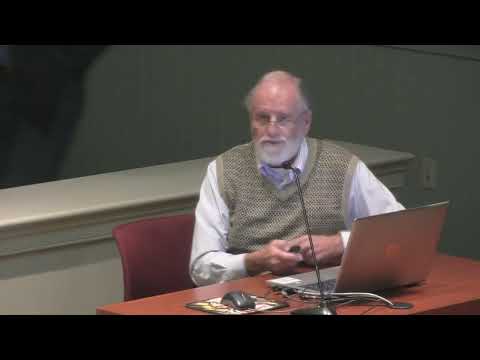
Doctor Eshelman, a paleontologist and former Calvert Marine Museum employee, told a public lecture audience that the Chesapeake Bay region’s shoreline losses reflect a complex mix of long‑term geologic change and short‑term coastal processes, and that "relative sea level" (land motion plus ocean change) is the more accurate way to describe local risk.
Eshelman opened by describing temperature and sea‑level cycles over hundreds of thousands to millions of years, including Milankovitch orbital cycles, and noted that instrumental records show a sharp temperature rise in the last ~100–120 years — the so‑called "hockey stick" pattern. He said that while long‑term cycles predict a cooling phase now, the observed twentieth‑century warming departs from that pattern and aligns with rising atmospheric greenhouse gases.
Turning to the mid‑Atlantic, Eshelman explained that the land under the Chesapeake and…
Already have an account? Log in
Subscribe to keep reading
Unlock the rest of this article — and every article on Citizen Portal.
- Unlimited articles
- AI-powered breakdowns of topics, speakers, decisions, and budgets
- Instant alerts when your location has a new meeting
- Follow topics and more locations
- 1,000 AI Insights / month, plus AI Chat