Mill Valley board adopts qualified first interim as district faces roughly $7.3 million shortfall; TK supporters urge alternatives to cuts
Loading...
Summary
The Mill Valley School District board approved a qualified first interim budget showing an estimated $7.3 million shortfall two years out, prompting trustees to pursue a budget reduction plan, a retirement incentive and community outreach; parents and teachers urged the board to preserve Transitional Kindergarten (TK).
The Mill Valley School District Board of Trustees voted to approve a qualified first interim budget after administrators reported that two-year projections fall short of the state-mandated 3% reserve, leaving the district with roughly a $7.3 million gap.
Assistant Superintendent for Business Paula Grenier told the board the figures reflect updated revenues and expenditures through Oct. 31 and new position-control accounting. "It is unfortunate that I am presenting to the board tonight a qualified certification. So we meet our current and 1 year, but our 2nd year out, we are not meeting our reserve levels of 3%," she said, outlining revenue losses from expired one-time COVID funding, a terminated lease and rising legal and special-education costs.
The qualified certification requires the county office to ask for a substantive budget-reduction plan and evidence the district is implementing concrete steps by the second interim in March. Grenier said the district will run additional budget advisory meetings, present a draft set of program-level options in January and return to the board for action in February or March depending on savings and the governor’s budget.
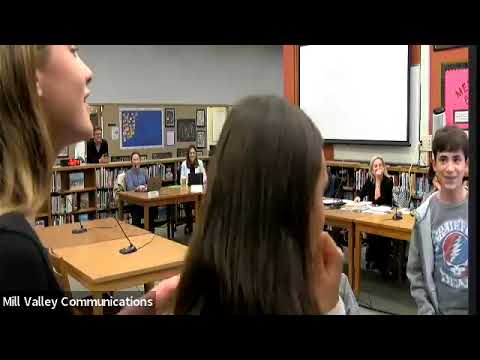
Community members and educators used the public-comment period to press the board to protect Transitional Kindergarten (TK) if cuts are considered. Anna Harris, a kindergarten teacher with 17 years in Mill Valley, said, "I wanted to give a voice of support for having TK remain a grade level in Mill Valley when the difficult conversations around the budget occur." Alex Duvall, speaking on behalf of the TK teacher team, urged trustees to "carefully consider the immense benefits of TK and urge you to find creative ways to continue to fund this valuable program amidst this budget exploration."
Parents offered concrete concerns about equity and planning. Ian Kenny said the community collected a petition with "nearly 300 families" who would be affected if TK were removed and warned of the financial burden on families who would need private preschool options.
As one near-term step, the board authorized the district to move forward with a PARS-administered early retirement incentive program that would offer eligible employees a structured buyout (up to 85% of last-year compensation, paid under various scenarios). The vendor will accept applications through Jan. 31, the district will analyze cost savings, and the board will decide in February whether to accept the plan. The motion to authorize PARS passed on a roll-call vote with trustees recorded as voting aye.
Board members and staff repeatedly emphasized they will present cost and program-level impacts before making personnel or program decisions. Superintendent Kaufman said she will compile a recommendation focused on "meeting the greatest needs of the greatest number of children" and open community surveys and meetings to gather input.
The first-interim approval is procedural—it accepts the district’s updated forecast; it does not itself enact cuts. Trustees noted the next substantive milestones will be the budget-advisory meetings and the district study session on program options planned this winter.
Votes at a glance: Sharon Nakatani was re-elected president earlier in the evening. The consent agenda and resolution 082425 (authorization to sign) were approved. The board approved the qualified first interim (voice vote) and authorized PARS to administer a retirement incentive (roll-call ayes recorded).