Get Full Government Meeting Transcripts, Videos, & Alerts Forever!
Get email alerts on the Energy Master Plan topic
No spam. Unsubscribe anytime.
Laguna Beach Unified reviews energy master plan aiming for carbon neutrality by 2030
Summary
Board heard a P2S Engineering presentation on a districtwide Energy Master Plan for six sites that models electrification, solar + battery storage, HVAC heat-pump replacements and EV charging; consultants estimate roughly $2 million in IRA incentives and outlined steps to integrate the plan into the facilities master plan before returning for approval.
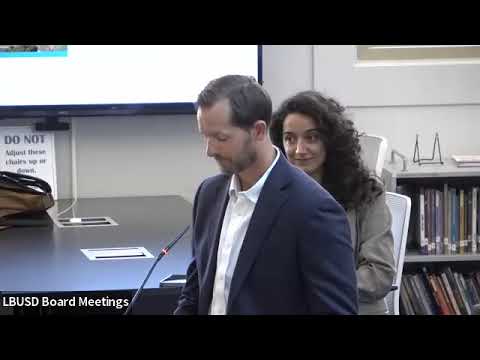
The Laguna Beach Unified School District board on July 25 heard an information presentation from district facilities staff and consultants at P2S Engineering on an Energy Master Plan that models steps toward carbon neutrality by 2030.
The presentation, introduced by Director of Facilities and Sustainability Ryan Zeta, outlined baseline 2023 energy use across six district sites and a suite of recommended energy conservation measures: scheduling and controls upgrades, lighting controls, HVAC replacements with heat pumps, electrification of domestic hot water, on-site solar photovoltaic (PV) and battery storage, and EV charging infrastructure. Tara Sharita, a mechanical engineer with P2S, said the study is intended as a roadmap and will be brought back to the board for approval once funding options are identified: "...give us a roadmap to carbon neutrality," she said.
Why it matters: the plan lays out both technical and financial pathways to reduce the district's greenhouse gas emissions and utility costs over time, but implementation requires substantial capital and coordination with outside funding sources. Consultants said electrification and PV+battery measures dramatically reduce natural gas use (the plan models elimination of more than 90% of existing natural-gas consumption at district sites) while increased electric loads from EVs and bus electrification require careful planning for charging infrastructure.
Key findings and numbers: P2S showed that about one-third of current campus energy consumption is natural gas and roughly two-thirds is electricity. The report uses Energy Use Intensity (EUI) benchmarks and identifies sites that fall above recommended ASHRAE ranges. Consultants estimated roughly $2,000,000 in IRA-related incentives could apply to the district’s recommended measures (presenters noted incentive assumptions were not included in the conservative cost baseline), and referenced a program-level cost estimate presented elsewhere in discussion that board members characterized as on the order of $19 million for full implementation.
Funding and incentives: presenters reviewed existing federal and state incentives used in modeling: Inflation Reduction Act (IRA) tax credits (modeled at about 30%), Southern California Edison (SCE) charge-ready incentive programs for EV infrastructure, the California EV Infrastructure Project (Cal EVIP) rebates, and California Air Resources Board (CARB) programs for bus electrification. The consultants cautioned that some incentive programs have annual application windows and fixed pools; IRA tax-credit rates were treated as stable in the model but could change in future rulemaking. "We don't anticipate it to really dwell down. It will continue to stay for 30%," a consultant said of the IRA modeling assumptions.
Board questions and staff responses: trustees pressed on partnership opportunities with the city, county and water district; staff said the P2S study focused only on district properties but did not rule out future partnerships. The district is communicating with the local water district and will explore joint power authority options that can expand access to renewable power. Board members also asked which energy conservation measures have the strongest payback; presenters said a normalized payback table and prioritized implementation schedule appear in the report appendix and that the current schedule is optimized based on payback while recognizing electrification may not immediately reduce utility costs due to current relative energy prices.
New construction and bus electrification: staff confirmed new buildings (including the El Morro project referenced in board discussion) will be designed for electric heating only. Consultants and staff noted that accommodating electric buses will require separate yard-infrastructure work to provide charging capacity and transformer upgrades before full fleet electrification can occur.
Next steps: staff reported they will work with audit/financial consultants (Eide Bailly) to identify outside funding and rebate opportunities, incorporate the energy master plan into the district’s annual facilities master plan update, and return to the board with an approval item that will include financing and cash-flow scenarios. The plan was presented for information only; the board did not take formal action on the report at the July 25 meeting.
The district staff requested public feedback on the draft report and said they will schedule follow-up stakeholder meetings and bring a funding/implementation recommendation to a future board meeting.