Buckeye Union board certifies first interim budget, staff warn of structural deficit

Buckeye Union School District Board of Trustees · December 18, 2024

Loading...

AI-Generated Content: All content on this page was generated by AI to highlight key points from the meeting. For complete details and context, we recommend watching the full video. so we can fix them.

Summary

The board approved the first interim budget certification after staff reviewed revenue gains, state reserve rules and a projected structural deficit; staff outlined potential enrollment and COLA risks and plans to use attrition and line-item reviews to address the gap.

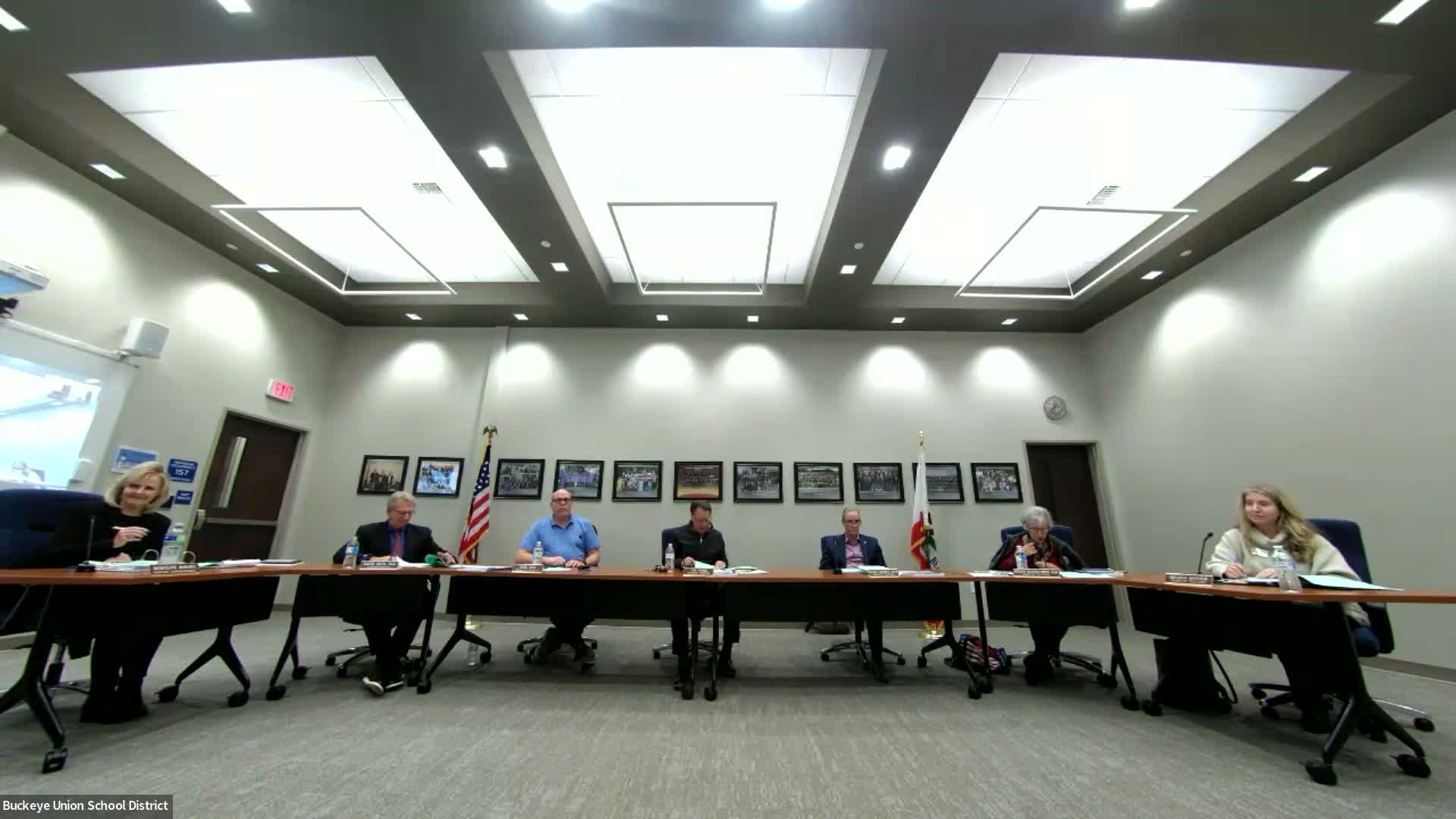
The Buckeye Union School District Board of Trustees unanimously certified its first interim budget at the Dec. 8 meeting after staff presented a financial snapshot and risk analysis. Assistant Superintendent Jackie (surname not provided in the transcript) walked the board through revenues, COLA assumptions and a projected structural deficit the presentation described as approximately $1.21 million after adjustments for one-time items and historical spending patterns.

Staff noted a modest improvement in revenues since budget adoption due in part to stock-market-linked capital gains but cautioned that state rules require deposits to reserves when gains are driven by capital gains, reducing available one-time funds. The presentation highlighted how declining enrollment affects per-student funding under the LCFF/ADA calculation and discussed proposals and legislative talk about shifting from ADA-based to enrollment-based funding. Staff said the district currently benefits from a three-year rolling average and that shifting funding models could materially change revenue in future years.

To address the structural gap staff indicated they would first pursue natural attrition and operational efficiencies and had already identified reductions in project codes and adjustments to benefits allocation. The report included projected reserve levels under current assumptions (for example, reserves projected to decline to mid-single digits in later years) and reminded the board that labor costs account for roughly 85% of the budget.

Board members asked clarifying questions about the enrollment versus ADA funding discussion and the timing of COLA assumptions. After discussion the board voted to adopt the first interim certification, which signals that, under current assumptions, the district can meet its financial obligations for the near term but must take steps to align long-term expenditures with revenue.