Get Full Government Meeting Transcripts, Videos, & Alerts Forever!
Get email alerts on the Voting Record Rule topic
No spam. Unsubscribe anytime.
Nebraska senators adopt rule recording 'present, not voting' as no on final passage with NADC exception
Summary
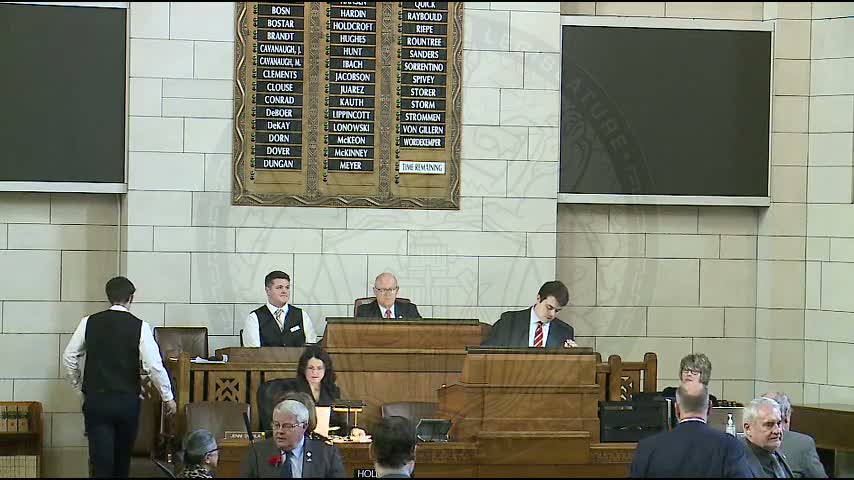
The Nebraska Legislature on Jan. 24 adopted a rules change that will record "present, not voting" as a no on final passage and cloture votes unless a member has properly filed a conflict‑of‑interest statement with the Nebraska Accountability and Disclosure Commission; the measure passed on a recorded vote of 31–17.
The Nebraska Legislature adopted a change to its permanent rules on Jan. 24 that will record "present, not voting" as a no on final passage and final‑reading cloture votes unless a senator has filed a conflict‑of‑interest statement with the Nebraska Accountability and Disclosure Commission (NADC).
Senator Kaut, who introduced the amendment, framed it as an effort to give constituents a clearer record of how their senators voted. "This bill is about transparency and accountability," she said during closing remarks, urging colleagues to approve the narrower version of her original proposal.
Opponents argued the change removes an intentional, meaningful option. "Present not voting is a stance," Senator Duncan told colleagues, saying PNV can communicate nuanced positions and that converting it to a no would make the journal less accurate. Senator John Kavanaugh and others warned the rule would create a historical record that might misstate what actually happened on the floor and could raise constitutional questions about maintaining an accurate journal.
Floor debate ranged across procedural and practical concerns. Sponsors said the change applies only to final passage and final‑reading cloture votes and that it does not affect motions to reconsider, which are not in order after final passage or cloture. Opponents said the shift could be used politically to produce campaign‑ready vote tallies and lamented that the amendment was brought directly to the floor rather than developed in the rules committee.
The clerk recorded the vote as 31 ayes and 17 nays; the president announced the change adopted on the recorded tally. The rule includes the exception that a member who has properly filed a conflict‑of‑interest statement with the NADC may be recorded as present and not voting instead of being converted to a no for the journal.
After the vote the chamber moved on to additional rules business and then adjourned for the day.
The change will take effect as part of the Legislature's permanent rules; the transcript of today's debate and the journal will reflect the new recording practice on applicable final‑reading votes.