Get Full Government Meeting Transcripts, Videos, & Alerts Forever!
Get email alerts on the Comprehensive Plan topic
No spam. Unsubscribe anytime.
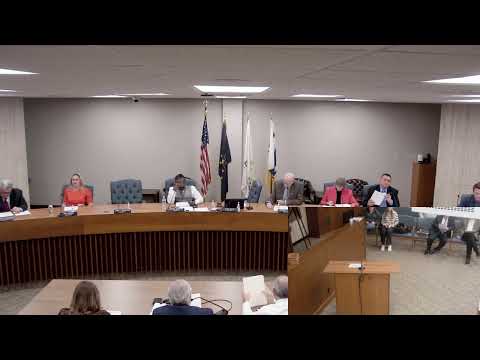
St. Joseph County Council adopts updated comprehensive plan after three‑year effort
Summary
The Saint Joseph County Council unanimously adopted Resolution 117‑24 on Nov. 12, 2024, approving a three‑year comprehensive plan intended as a living guide for land‑use decisions and to support zoning. Staff emphasized the plan is advisory; public commenters asked for clarity on language about wetlands and future changes.
The Saint Joseph County Council unanimously adopted Resolution 117‑24 on Nov. 12, 2024, approving an updated comprehensive plan for unincorporated county areas after a three‑year public process.
Area Plan Commission Director Abby Wiles introduced the item and consultant Cynthia Bowen said the plan "is really required by the Indiana code, especially if you want to have a zoning ordinance. You must have a comprehensive plan." Bowen described the plan as a living guide for elected officials, staff, developers and the public to inform land‑use decisions and future amendments.
Public commenters asked for clarification about language describing "wetland treatment systems" and other wording flagged as "other tweaks." Tom Roe, a resident, said he supported the plan broadly but asked that the council "bring it back to the public" before implementing substantive interpretive changes: "I don't know what that means" in reference to language about wetlands and wastewater options.
Area Plan staff responded that the plan's language allows the county to explore alternative wastewater approaches such as cluster or wetland treatment systems only after consultation with the state Department of Health and that any such system would require appropriate state permits (NPDES). Staff reiterated that the comprehensive plan functions as policy guidance, not an enforceable zoning ordinance.
The council moved to adopt the plan and, following a roll call, approved Resolution 117‑24 by an 8‑0 vote. The council record shows the resolution passed without recorded dissent; staff said the plan will remain a living document and encouraged periodic review and targeted updates.
The immediate next step is implementation through staff guidance and committee review of future land‑use petitions against the adopted plan. Any future amendments that change substantive guidance or enable new permitting pathways for alternative wastewater systems would require additional public notice and, in many cases, permitting from state agencies.