Get Full Government Meeting Transcripts, Videos, & Alerts Forever!
Get email alerts on the Large Scale Solar Zoning topic
No spam. Unsubscribe anytime.
Council committee debates solar ordinance amendments after Area Plan Commission’s unfavorable recommendation
Summary
Committee members questioned Bill 82-24, a zoning text amendment to increase setbacks and landscaping standards for large-scale solar, after the Area Plan Commission returned it unfavorably (6–2). Councilman Tanner proposed postponing the measure indefinitely; members also raised concerns about property values, decommissioning and the 90-day statutory deadline.
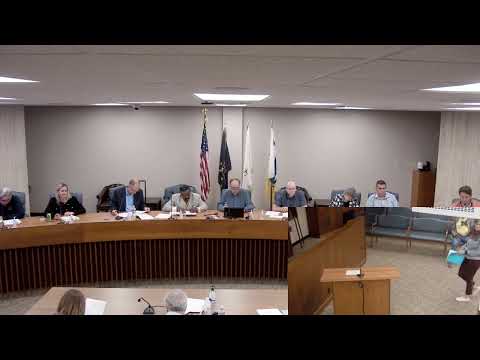
A St. Joseph County Council land-use committee meeting on Sept. 24 considered Bill 82-24, a proposed text amendment to the zoning ordinance that would revise development standards for large-scale solar renewable-energy systems, and heard conflicting views after the Area Plan Commission returned the amendment unfavorably.
Abby Wiles, Area Plan Commission director, told the committee the amendment would increase the minimum distance from a solar panel to a nonparticipating property or building wall from 250 feet to 500 feet, add a 500-foot setback for parks and preserved areas, require Type 2 landscaping abutting residential uses and include additional drainage standards. Wiles said the APC voted 6–2 and that public input at the APC hearing included three speakers in favor, two opposed and one written remonstrance. "This was initiated by you all, counsel, as resolution r 1024," Wiles said while explaining the proposed text changes.
Councilman Tanner reviewed the chronology of the proposal and said he was not recommending a formal motion but offered a personal view: "I think it might be in our best interest to postpone this indefinitely." Tanner cited the Area Plan Commission’s unfavorable vote and remonstrances as part of his reasoning but acknowledged the council could act or send a recommendation.
Other council members pushed back on postponing the matter indefinitely. Abby Wiles noted a statutory time clock: "a text amendment does have a time clock per state statute. So the council must vote on it within 90 days. And if not, then it takes effect as certified," and she calculated the 90‑day deadline as Dec. 16, 2024. Several members said the public deserved elected officials' input and suggested moving the item to the full council for an up-or-down vote.
Members raised additional concerns including whether the proposed 500-foot minimum from residences was excessive, the need to address decommissioning of solar fields, and potential effects on property values for nearby residents. One council member warned that some supporters say the amendment still would not go far enough for their concerns; others said the special-use review process could provide flexibility.
The committee did not take a final recommendation to the full council before the meeting was recessed because of a tornado warning.