Get Full Government Meeting Transcripts, Videos, & Alerts Forever!
Get email alerts on the Solar Zoning topic
No spam. Unsubscribe anytime.
Council tightens large-scale solar rules, raising setbacks and drainage standards
Summary
The council adopted a text amendment increasing nonparticipating residence setbacks from 250 to 500 feet, expanding buffer and drainage requirements, and clarifying that battery-storage projects above state thresholds would be reviewed by state agencies; the change passed 9–0 after extensive public comment and debate about Hexagon’s grandfathering and local impacts.
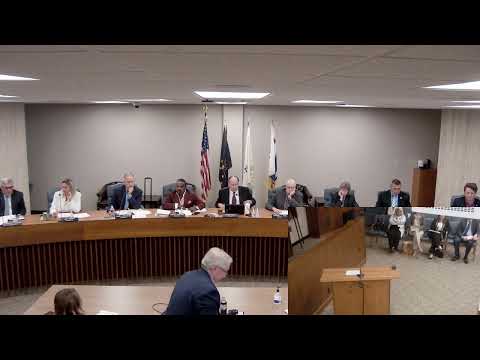
The Saint Joseph County Council voted 9–0 on Oct. 8 to adopt text amendments to county land-use rules governing large-scale solar energy systems.
Area Plan Director Abby Wiles summarized the changes included in Bill 82-24: raising the minimum setback from the outermost foundation of a nonparticipating residence to a solar panel from 250 feet to 500 feet, adding a 500-foot setback for preserved parks, expanding buffer yard and landscaping requirements to any residential use or zoning district (rather than only subdivisions of 10 or more lots), and adding drainage provisions that allow the zoning administrator or the Saint Joseph County Drainage Board to require a drainage plan and require repair of damaged drainage infrastructure.
Wiles told the council the Area Plan Commission registered a 6–2 unfavorable recommendation; the county council considered the amendments after prior committee work earlier in the year.
Public comment was extensive and split. Supporters — including residents who live near proposed projects — argued that larger setbacks, stronger buffers and drainage protections were necessary to preserve property values, rural character and environmental stability. Opponents, including speakers who described commercial interests and developers’ perspectives, said the changes would encroach on property rights, make the county less attractive for solar investment, and exceed state voluntary setback guidance of 250 feet.
County attorney and zoning staff explained that projects already in process (Hexagon) were likely to be "grandfathered" under prior rules because changes cannot be applied retroactively to activities initiated before an effective date. The transcript references state statute 36-7-4-1109 in that context and county staff said they had reviewed the question with counsel.
Council members discussed the balance between protecting rural neighbors and preserving economic opportunities. Several members who supported the ordinance said development standards communicate county expectations to property owners and potential developers and that the special-use process would remain available for negotiated waivers or written agreements.
The ordinance passed on a roll-call vote of 9–0. Councilors said the measure does not eliminate project-level review but sets countywide minimums for setbacks, buffers and drainage planning going forward.