Get Full Government Meeting Transcripts, Videos, & Alerts Forever!
Get email alerts on the Voting Rules topic
No spam. Unsubscribe anytime.
Floor Debate Heats Up Over Counting 'Present, Not Voting' as No; No Final Vote
Summary
Senator Kautz proposed counting an intentional 'present, not voting' as a no on final reading to increase accountability. Opponents raised constitutional, ethical, and conflict-of-interest concerns; the floor debated the proposal but did not record a final vote and deferred remaining business to the next day.
LINCOLN — A high-profile floor debate on a proposed change to voting procedure dominated discussion during the Nebraska Legislature's Day 10 session, though members did not reach a final vote before adjourning.
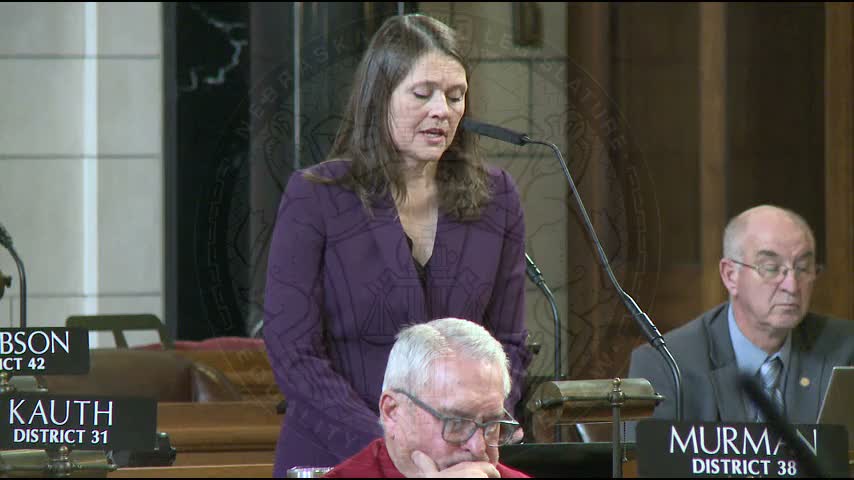
Senator Kautz offered a floor amendment to treat a deliberate "present, not voting" on final reading as a recorded no, saying the change would give constituents clearer information about how their senators stand. "If you choose to vote present not voting, your vote would be counted a no," Kautz said on the floor.
Opponents raised legal and ethical objections. Senator Conrad argued the change could "record a legal fiction," would interfere with conflict-of-interest protections and might compel speech in violation of constitutional principles. "It would be wrong to compel through forced government action a member to violate their religious conscience," Conrad said in his floor remarks.
Proponents, including Senator Ben Hansen, cited parliamentary precedent in Mason's Manual and proposed a compromise that would treat a filed conflict-of-interest form as an excused absence rather than a forced recorded no. "Mason's Manual ... members must vote unless excused," Hansen said, arguing that the body has the authority to require voting unless excused and that a conflict-forms approach could address many concerns.
Senators debated practical issues such as implementation timing (programming the chamber's voting board and journal) and whether the proposal would amplify partisan divisions; some members urged delaying the change to work out technical details.
With a crowded stack of new bills and committee hearings scheduled later in the day, the presiding officer moved to read additional bill introductions and adjourn. Lawmakers left the proposal unresolved; debate is expected to resume when the Legislature reconvenes.