Get Full Government Meeting Transcripts, Videos, & Alerts Forever!
Get email alerts on the Animal Welfare topic
No spam. Unsubscribe anytime.
Residents press Moore County commissioners over animal shelter euthanasia, transparency and volunteer access
Summary
Multiple Moore County residents urged the board to investigate high euthanasia rates at the county animal shelter, questioned temperament testing and rescue notification procedures, and asked for longer holding times, improved volunteer programs and clearer accounting for shelter spending.
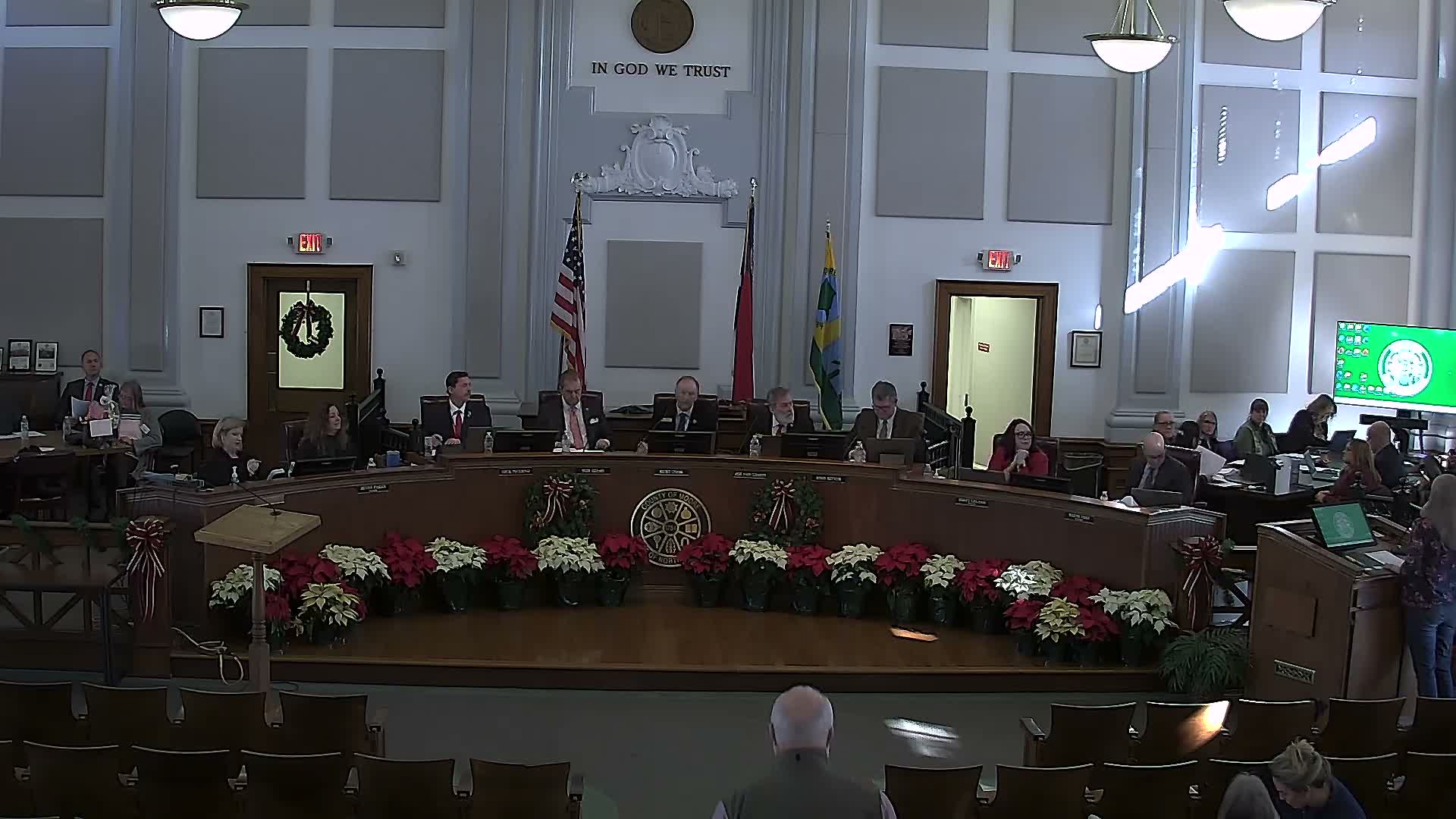
Several Moore County residents used the public comment period Dec. 2 to press commissioners for changes at the Moore County Animal Shelter (MCAS), alleging high euthanasia rates, inadequate temperament testing and poor communication with rescue organizations.
Amy Ference, who identified herself as a third‑generation Moore County resident, said she tried to adopt a puppy she called "Copper" but was told the animal was euthanized immediately after the 72‑hour stray hold because he was a possible risk to chickens. "Why was this puppy immediately euthanized and not given a chance to live and be adopted?" Ference asked the board, and she requested details on what temperament testing was performed and whether rescues had been notified.
Other speakers repeated calls for transparency and reform. A resident identifying herself as Alana said she has tracked shelter census numbers and asserted that the facility, which she said is permitted for 60 dogs and 100 cats, frequently houses far fewer animals while reporting high euthanasia counts. Bill Hammond, a retired accountant, cited a figure of 1,290 animals euthanized last year and asked for an accounting of how the shelter's reported budget of $1,026,914 was spent.
Jeannie Hammond urged removing shelter oversight from the sheriff's office and hiring trained animal‑care professionals, along with instituting valid behavioral assessments by qualified people, creating a volunteer coordinator role and posting photos and descriptions of animals to increase adoptions. She said a 72‑hour hold is insufficient and asked the board to consider longer holding periods.
Board members acknowledged the passion behind the comments and described some steps taken in recent months — including extended adoption hours and increased social media outreach — while also noting that emotional responses sometimes clash with operational realities. Commissioners encouraged residents to work with staff and rescues to find constructive solutions and said staff would follow up on requests for transparency and data.
The public comments did not prompt a formal board vote at the meeting; commissioners noted the concerns and discussed next steps, including potential staff follow‑up and opportunities for volunteer involvement.