
Sheldon ISD weighs costly fixes, rentals after Garrett Elementary geothermal failure
Get AI-powered insights, summaries, and transcripts
Subscribe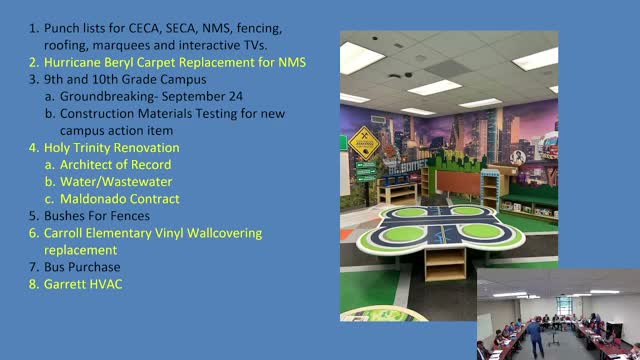
Summary
District staff told the board that Garrett Elementary’s geothermal HVAC system has lost effective control after years of leaks or air intrusion; consultants offered repair or replacement options that range from temporary rentals costing tens of thousands per month to full replacement above $1 million.
Sheldon ISD officials told the Board of Trustees that Garrett Elementary’s geothermal heating, ventilation and air-conditioning system has been operating without reliable building controls for years and underperformed through recent heat that left much of the school without adequate cooling.
Dr. Sayed, who briefed the board, said the school’s geothermal design relies on about 168–300 wells drilled roughly 300 feet into the ground. Over time the system has developed small leaks or air intrusion that have reduced the geothermal system’s ability to provide cold water to the system; staff said on hot days this summer about 60–70% of the HVAC capacity was lost and portable units were used to keep classrooms passable.
The district has sought multiple consultants. Dr. Sayed said EMA and Texas Air have inspected the site and an expert from Texas Air’s Dallas office was scheduled to return for further analysis. Staff presented two principal paths: locate and repair the leaks and restore the geothermal system—an approach consultants said would be less expensive up front but could require recurring fixes—or remove the geothermal system and install an alternate cooling solution such as chillers or rooftop units.
Officials provided cost and timing estimates. A chiller installation to replace the geothermal infrastructure was estimated at a little over $1,000,000 and could extend into the following summer. Short-term rental mitigation options include a chiller rental estimated at $55,000 for the first month and $18,000 in subsequent months, and a water-tower rental estimated at about $40,000; staff cautioned the water-tower option would not resolve the underlying well-temperature issue. Staff also noted some targeted split units will be necessary for the building’s front office regardless of the long-term choice.
Board members asked about how long repaired wells would take to cool and whether the system had been effective when new. Dr. Sayed said the original system did function as designed but that ground temperatures have changed over years of operation; consultants estimated the ground could take from one month to as long as six months to return to effective temperatures after repairs, depending on how long the problem persisted.
The board received the presentation and asked staff to report back after the next consultant visit. No formal repair contract was approved during the meeting; staff emphasized the district will update trustees after the consultant’s on-site review.