Get Full Government Meeting Transcripts, Videos, & Alerts Forever!
Get email alerts on the Student Meals topic
No spam. Unsubscribe anytime.
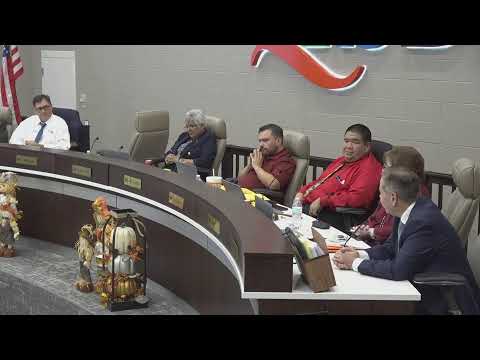
Trustees debate and approve extra meal funding for students at competitions; trustees propose budget scenarios
Summary
After extended debate about students paying for meals during out-of-town competitions, the board approved an amended motion to allocate additional funding (including discretionary commitments) for student meals during extracurricular events and asked staff to develop budget scenarios for a longer-term solution.
LAREDO, Texas ' The Laredo ISD Board of Trustees spent substantial time on Nov. 14 discussing how the district funds student meals during extracurricular travel and competitions and approved an amended motion to allocate additional funding while staff prepares budget options for a permanent change.
Board members raised multiple concerns: several trustees described students and families who must pay out-of-pocket while representing campuses, and coaches and sponsors who have been covering food costs. "They have to eat," Trustee Monica Garcia said, arguing for district support when students are away on extended competitions. Trustees cited current per-diem allocations used by some programs (examples noted in discussion: $8 for breakfast, $10 for lunch, $12 for dinner) and said those rates and membership-based allocations are strained when teams advance and travel longer.
District staff explained that campus allocations are based on membership counts and set bases; some programming (career and technical student organizations) receives separate allocations (for example, a cited $20-per-member basis for certain CTE allocations). Staff recommended discretionary funds as an immediate, short-term source and promised to prepare scenarios during the budget development process showing how increasing the basis (for example, from $106 to $120 per membership) would alter allocations districtwide.
Trustees proposed and seconded motions to allocate money immediately for FFA student meals for the coming weeks; a few trustees volunteered portions of discretionary funds (one trustee offered $3,000) to bridge the shortfall while staff returns with midyear requests or budget amendments. The amended motion to provide short-term support and to task staff with budget scenarios passed by voice vote.
Trustees also discussed booster clubs and fundraising options, training for sponsors on budget and booster-club rules, and the district's practice of issuing midyear funding requests when allocations run low. Staff said they routinely alert the board when campus allocations are exhausted and that superintendent-level funds can be used to support programs that advance farther in competition.
The board's action provides short-term meal support for students engaged in district-sponsored extracurricular activities while staff develops long-term budget models for the 2025 budget cycle.