Get Full Government Meeting Transcripts, Videos, & Alerts Forever!
Get email alerts on the Federal Grants topic
No spam. Unsubscribe anytime.
Laredo ISD details federal grants for 2024–25, highlighting Title I payroll, Title IV safety initiatives and support for 12,000 emerging bilinguals
Summary
At its June 20 meeting, Laredo ISD presented planned federal program spending: $15.6M for Title I (mostly payroll), $1.1M for Title IV (including vape detectors and cell-signal projects), Title III support for roughly 12,000 emerging bilinguals, IDEA B special education allocations and Perkins CTE support.
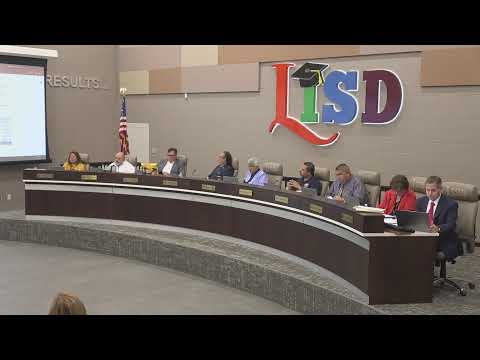
Laredo ISD staff presented the district’s planned uses for federal grant funds for 2024–25 during the June 20 public meeting item on federal programs.
Miss Oralia Cortez, identified in the record as a federal programs leader, presented Title I funding of $15,600,000, saying most of that money — about $12,400,000 — is allocated to payroll. Cortez described Title I uses as supplemental intervention and enrichment programs, instructional facilitators at campus level, digital learning specialists and behavior specialists, parent and family engagement and professional development. She said all 28 campuses qualify as Title I schoolwide campuses because of economically disadvantaged student counts.
Cortez outlined Title IV ($1,100,000) priorities in three required areas: well-rounded education (STEAM/robotics/college exposure), safe and healthy students (metal detectors, phased installation of vape detectors, and an in-building cellular enhancement project to improve indoor outbound calling in emergencies) and technology. She said TEA requires minimum spend thresholds (20% minimum in each of the three areas) but districts may allocate more to meet needs. Trustees asked whether robotics funding could be distributed more equitably; Cortez said robotics purchases are made incrementally (initially two robots per campus) and that principals and program staff (Roger Garcia referenced) request additional equipment; she estimated recent robotics spending at roughly $15,000–$20,000 though she did not provide a precise district-wide line-item total.
Doctor Carmen Pompa presented Title III allocations of $1,024,625 and said the district currently serves about 12,000 emerging bilingual students (roughly 57 percent of the student population). She described positions funded through Title III, including about 6.5 bilingual/ESL strategists (one split-funded) and 4–5 language and literacy coaches (four at elementary, one covering all middle schools), and noted summer camps and Lexia English supports used for newcomers.
Raul Gomez, special education director, presented IDEA B formula funding and object-code breakdowns for personnel (teachers, teacher assistants, related services staff), contracted services (certified interpreters, psychologists, occupational therapists), assessment materials and staff development. He reported serving about 99 students through the regional day school for the deaf alongside services provided to neighboring districts.
The Perkins (CTE) presentation described funding for career and technical education FTEs, instructional equipment, industry-certification exam costs, curriculum support, enrichment camps and work-based learning programs.
Trustees asked several implementation questions, including how Region 1 supports PBIS (positive behavior interventions and supports) and how often Region 1 staff conduct observations. Cortez and district staff said Region 1 provides training and follow-up observations and that campuses were tiered for additional support where implementation lagged. Staff committed to supplying trustees with additional performance reports: preliminary district-level assessment reports would be distributed the week following the meeting (June 27), with final state releases expected later in the summer.