Get Full Government Meeting Transcripts, Videos, & Alerts Forever!
Get email alerts on the Attainable Homeownership Overlay topic
No spam. Unsubscribe anytime.
Lehi planners hear proposal to trade density for deed‑restricted, lower‑priced homes; questions linger over comparables and enforcement
Summary
At a Dec. 5 Lehi City Planning Commission hearing, staff and a home‑builder presented an ‘attainable homeownership overlay’ that would let developers increase density in exchange for selling some homes at least 20% below comparable prices; commissioners and public commenters supported the goal but pressed staff on how comparables, deed restrictions and enforcement would protect existing homeowners and ensure developers honor price commitments.
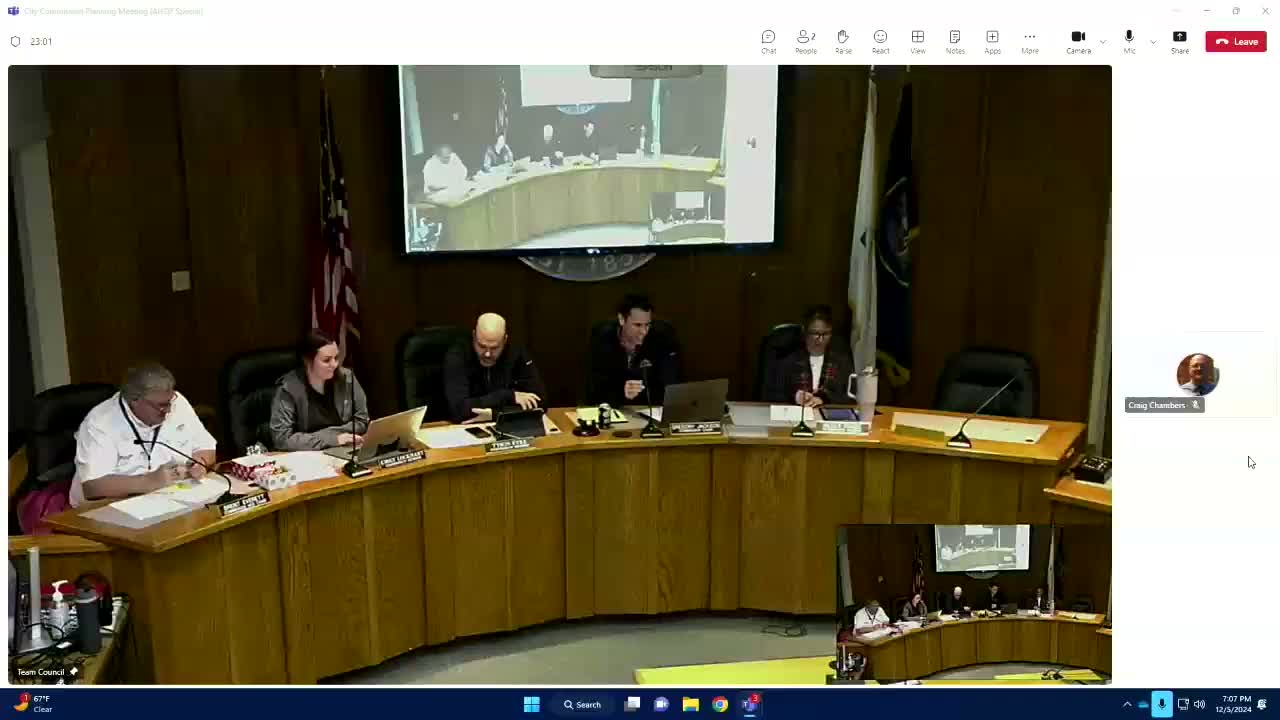
Lehi City Planning Commission members on Dec. 5 heard more than two hours of testimony, public comment and commissioner questions on a proposed Attainable Homeownership Overlay Zone that would allow developers to seek higher residential density in exchange for legally recorded commitments to sell a share of homes at a reduced price.
Britney, the staff presenter, said the proposal grew from more than a year of work with city staff, council members and private developers and framed it as a response to rising local housing costs. She cited figures compiled by Jason Harris using Census and MLS data, saying Lehi’s 2023 median household income was about $107,000 (which she used to estimate a 100%‐affordability price of roughly $480,000) and that 2023 MLS sales showed a median single‑family sales price of about $655,000. She also showed a 2024 snapshot of far fewer active listings and substantially higher asking prices, noting the numbers were pulled earlier and might change.
Under the overlay as described, a landowner or developer could apply for additional lots or units in exchange for a development agreement that would include a ‘target price’ for certain homes. The ordinance would set a minimum discount (20% below comparables in staff examples) but allow builders to propose deeper discounts. In a double‑density example presented, developers could subdivide 53 lots into 106 while keeping similar home sizes and, in the example, reduce sale prices on the deed‑restricted units by roughly 20–30 percent.
Supporters at the meeting said the tool could increase housing supply, bring essential local workers closer to jobs and reduce commutes. Leah Jay of Strong Towns Lehi told the commissioners that allowing more density is a ‘‘math’’ solution to supply‑driven price pressure. A Sky Ridge High School senior, Kenzie Sterling, said smaller amenities would be an acceptable trade‑off to permit more young people to purchase homes locally. Several attendees, including a builder who identified himself with Fieldstone Homes, said some builders would consider the voluntary program if it provided fixed land and development costs and clear mechanisms to make the math work.
But the hearing focused principally on procedural and market‑mechanics questions that commissioners said must be resolved before a definitive recommendation. Commissioners repeatedly asked how ‘‘comparables’’ would be defined for the target price (presenters referenced a 12‑month lookback in the draft and discussed options including a one‑mile radius or limiting comparables to Lehi). They asked how the ordinance would work for multi‑phase developments whose later phases might be built years after the initial price baseline, and whether developers could or would seek amendment if costs rose.
Appraisals, deed restrictions and market comparisons were a central concern. Several commissioners worried that deed‑restricted, lower‑priced units could become comparables that depress market values of nearby existing homes; staff and builders argued deed‑restricted units would typically be treated as non‑comparable (‘‘apples and oranges’’) because of deed restrictions and PUD designations, but they acknowledged appraisal practice varies and suggested that title companies, appraisers and lenders would have to be consulted for written clarity.
Commissioners also sought specifics on enforcement: whether an HOA would police deed restrictions, whether the city would take on enforcement responsibility project‑by‑project, and how lenders would respond when a restricted home resells. Staff said the deed restriction would be recorded and typically trigger title searches and lender review; the proposal discussed an owner‑occupancy deed restriction for up to 10 years and an equity release schedule that would allow homeowners to realize increasing shares of equity (presenters discussed a 5‑year equity realization point and the deed restriction expiring at 10 years in illustrative wording).
Several commissioners urged alternatives or safeguards: requiring owner‑occupancy in certain zones, limiting home footprints in defined subareas, piloting on city‑owned land, or clarifying language so homeowners and landowners have transparent, documented expectations. Commissioners asked staff to fix editorial issues in the draft (acronym consistency, HOA language) and to write clear comparable‑valuation rules rather than leaving that entirely to future council discretion.
No formal vote on a recommendation is recorded in the transcript. Commissioners directed additional questions and suggested edits that staff and the developer said they would address before the proposal returns to the commission or goes to the city council.
What’s next: Staff and the developer will refine the ordinance language and return with clearer definitions of comparables, enforcement mechanisms and deed‑restriction mechanics; commissioners signaled they want those clarifications before making a final recommendation to the Lehi City Council.