Get Full Government Meeting Transcripts, Videos, & Alerts Forever!
Get email alerts on the Legislation Introductions topic
No spam. Unsubscribe anytime.
Lawmakers introduce a broad package of bills covering health, education, taxation and public safety
Summary
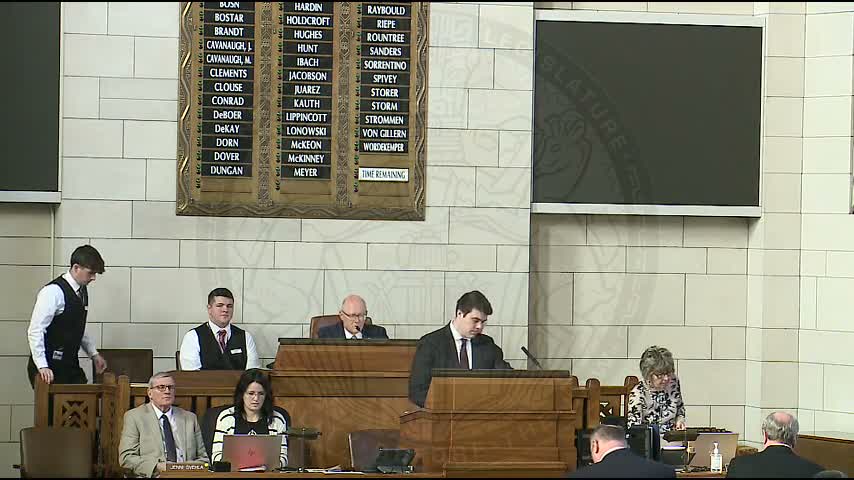
Clerks read scores of new bills covering topics from child care subsidies and school safety to property tax relief, marijuana policy changes, and regulatory reforms. Many bills were introduced by individual senators and several committees and some carry emergency declarations.
Clerks read into the record a long series of newly introduced bills and several legislative resolutions and committee notices. The bills announced cover a wide range of topics, including workforce and retirement provisions, the establishment of a state child care subsidy program, revisions to the Nebraska Liquor Control Act and sports wagering rules, proposals to repeal the Nebraska certificate-of-need requirement for health care, changes to property taxation and education finance, criminal-justice and juvenile justice reforms, and housing, energy, and consumer-protection measures.
Examples listed by the clerk include LB 433 (introduced by Senator Sorrentino), LB 436 (from the Health and Human Services Committee addressing regulation of health professions), LB 437 (to eliminate the Nebraska health care certificate-of-need act), LB 438 (authorizing online sports wagering under the Nebraska Racetrack Gaming Act), LB 439 (a property tax circuit-breaker proposal), LB 442 (to establish a state child care subsidy program), LB 450 (changes related to the Property Assessed Clean Energy Act), and numerous others addressing school safety plans, worker compensation, liquor licensing, and regulatory management.
Several bills were introduced by committees, including measures affecting licensing, bank and consumer protections, and permitting timelines. The clerk also read proposed constitutional amendments (LR series) addressing environmental rights, initiative petition deadlines, and the selection of presidential electors. In multiple cases the clerk noted whether a bill would harmonize provisions, repeal existing sections, or was introduced to declare an emergency.
The clerk concluded the reading by noting committee hearing notices and some housekeeping items such as additions of names to sponsorship lists and a notice that the referencing committee would meet upon adjournment. Most bills were read without debate on the floor; the session continued with routine procedural activity and concluded with a motion to adjourn.
Because the bills were introduced in bulk, the transcript records the titles and statutory sections affected but does not provide bill text or committee reports; interested parties should consult official bill files for complete language and fiscal notes.