Get Full Government Meeting Transcripts, Videos, & Alerts Forever!
Get email alerts on the Leadership And Priorities topic
No spam. Unsubscribe anytime.
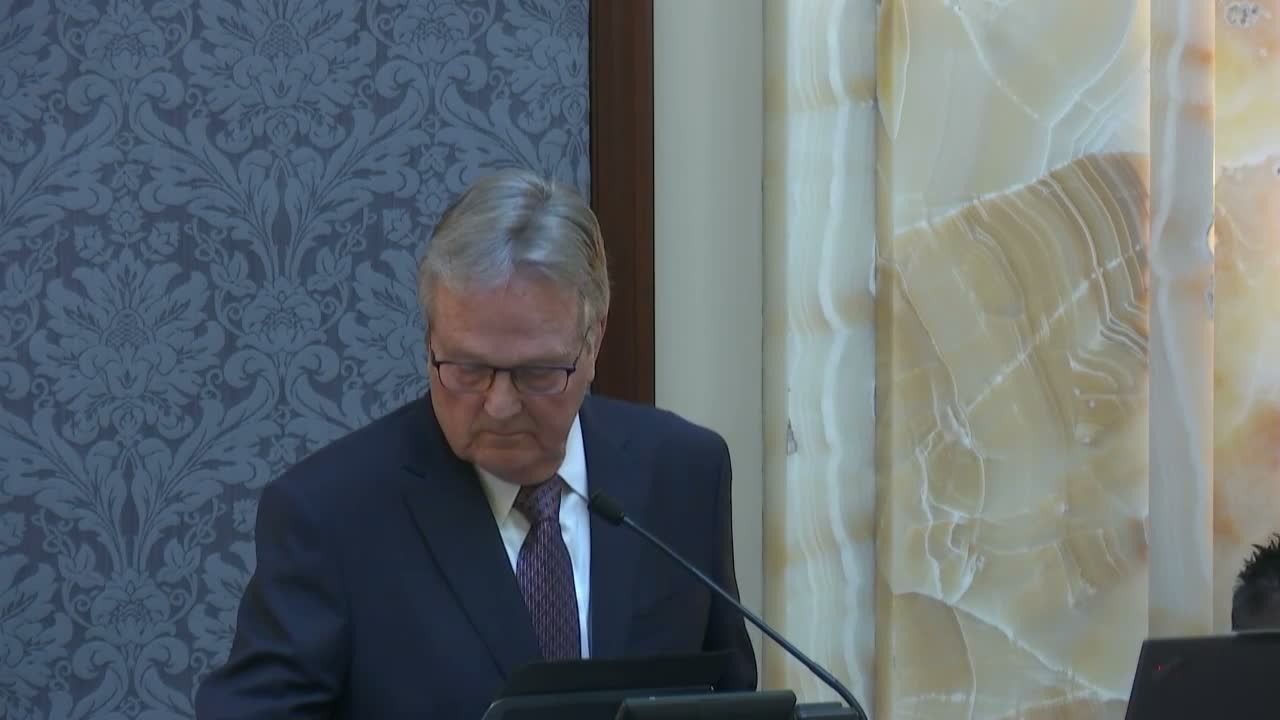
Jay Stewart Adams elected president of Utah Senate, sworn in and lays out energy and education priorities
Summary
Jay Stewart Adams was elected president of the Utah Senate by acclamation, took the oath of office and delivered an opening address emphasizing energy expansion (including micro nuclear and geothermal), AI/data-center readiness, water collaboration, tax relief and investments in education.
Jay Stewart Adams was elected president of the Utah Senate by acclamation on the opening day of the 66th Legislature and was sworn into office before the chamber.
Adams took the oath after a nomination from Senator Cullimore and a second from Senator Karen Kwan. The presiding officer declared Adams elected by acclamation and administered the oath of office. Lieutenant Governor Deidre M. Henderson earlier read certificates of election for multiple senators, and several newly elected and appointed senators were sworn in individually.
In his opening remarks, President Jay Stewart Adams framed a ‘‘Utah dream’’ built on ‘‘hard work, community, family, innovation, and opportunity.’’ He warned against influence from ‘‘unelected special interest groups outside of Utah’’ and said Utah must protect local governance. Adams argued that Utah should prepare to host technology and energy infrastructure to support artificial intelligence and data centers: "AI needs data centers. Data centers need what? They need power. They need continuous baseload power." He urged the state to pursue multiple energy pathways, including accelerating geothermal projects (he cited a Beaver County project with an initial 400-megawatt capacity), expanding natural gas where appropriate, investing in cleaner coal technology, and positioning Utah to adopt small modular (micro) nuclear reactors.
Adams also addressed critical minerals, asserting that Utah has ‘‘40 of the 50 critical minerals needed in the world’’ and that developing extraction and manufacturing here would strengthen national security. He identified water availability in the Great Salt Lake basin as a concern and said Utah leaders are engaging neighboring states on potential solutions.
On fiscal priorities, Adams said the administration will seek continued income-tax reductions and highlighted investments in education and workforce alignment, pointing to concurrent enrollment successes at Weber State and Utah Valley University and programs to improve early literacy and career pathways. He closed by invoking Utah’s role in hosting the 2034 Olympics and suggested the state pursue ambitious infrastructure projects, including advanced transport and a potential spaceport.
Senator Mike McKell moved that Adams’ remarks be printed in the Senate journal; the motion passed by voice vote. President Adams then appointed committees to notify the governor and the House that the Senate was organized and ready to do business.
The Senate recessed to reconvene for additional business later in the day.