
Commission finds petition for attorney fees legally sufficient and sends Myers matter to DOAH
Get AI-powered insights, summaries, and transcripts
Subscribe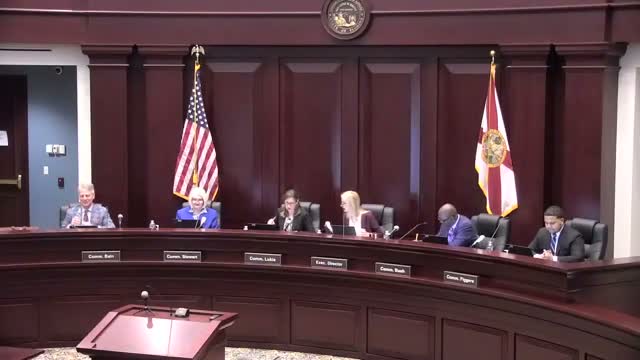
Summary
The Florida Commission on Ethics voted to find legally sufficient a petition by Crescent City Mayor Michelle Myers seeking costs and attorney’s fees after dismissal of four complaints, forwarding the matter to the Division of Administrative Hearings for an evidentiary hearing.
The Florida Commission on Ethics voted to find legally sufficient a petition filed by Crescent City Mayor Michelle Myers seeking costs and attorney’s fees and referred the matter to the Division of Administrative Hearings for a full evidentiary hearing.
Commission staff told members the petition alleges four nearly identical complaints were filed against Myers, that the complaints alleged she directed city staff and the CRA to award more than $44,000 to a local business, and that staff concluded the petition, on its face, states facts that if assumed true would support entitlement to recovery under Rule 34‑5.0291 and the statute. Staff said the petition satisfies the technical filing requirements (timeliness, petitioner status, and identification of claimed fees) and the pleading elements courts have required for a costs claim.
Michelle Myers’ attorney Susan Erdle urged the commission to permit a hearing, arguing the complaints were “maliciously drafted” and that due process requires an evidentiary proceeding so Myers can seek recovery. Erdle told the commission, “we filed this petition, because the mayor, is a citizen of her community and her good name has been maligned.”
Christopher “Doc” Bailey, a complainant and community member, told the commission he had no malicious intent and described reviewing city books and audit delays that led him to file complaints. Bailey said he was motivated by a public‑interest concern about how roughly $44,000 was awarded to a single business and recounted a separate $25,100 check that did not come before his city commission.
General counsel and staff repeatedly reminded members that today’s scope was limited to legal sufficiency — whether the petition, on its face, alleges facts and grounds that would justify an evidentiary hearing — not to relitigate investigative findings. After questions, a motion to adopt staff’s recommendation that the petition is legally sufficient passed by voice vote. The commission’s action sends the petition to DOAH where an administrative law judge will hold an evidentiary hearing and issue a recommended order; the commission retains the authority to adopt a final order after reviewing the ALJ’s findings.
The commission’s decision does not determine whether the complainants acted maliciously or whether Myers is entitled to recovery; those questions will be resolved at the DOAH evidentiary stage.