Get Full Government Meeting Transcripts, Videos, & Alerts Forever!
Get email alerts on the Public Health Vector Control topic
No spam. Unsubscribe anytime.
Vector control briefed San Fernando on mosquito risks, urged residents: 'no water, no mosquitoes'
Summary
The Greater Los Angeles County Vector Control District told the San Fernando City Council there are two positive mosquito samples in the city and urged residents to remove standing water, described surveillance and a pilot sterile‑insect program, and offered outreach partnerships with the city.
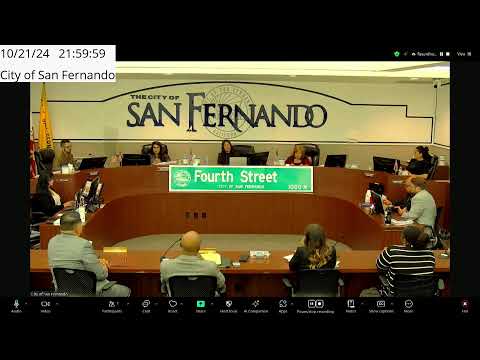
David Palin, communications manager for the Greater Los Angeles County Vector Control District, told the San Fernando City Council the district has detected two West Nile–positive mosquito samples in the city and stressed prevention steps residents can take to reduce mosquito breeding. "No water, no mosquitoes," Palin said, summarizing the district's central message and urging homeowners to empty containers, drill holes in discarded bins and keep pool water circulating.
Palin outlined the district's surveillance and response strategy, including door‑to‑door inspections within at least 200 feet of positive samples, larval and adult surveillance and trapping, and collection of dead birds as an early warning for West Nile circulation. He distinguished Culex mosquitoes (dawn/dusk biters linked to West Nile and other encephalitides) from invasive Aedes species (day‑biting, linked to dengue, Zika and chikungunya) and said local risk for dengue remains low but adjacent areas have seen cases.
The district described integrated vector management tactics—scientific surveillance, targeted operations and community communications—and noted a pilot sterile insect technique (SIT) that radiates male mosquitoes to prevent viable offspring. Palin said the SIT pilot in Southern Tujunga showed promising results and that other cities have expressed interest; he said an interest form can be shared with San Fernando if the council wants to explore participation.
The presentation closed with practical guidance for residents: tip and toss small water containers, drill drainage holes in bins, cover or rotate water barrels after use, and use EPA‑recommended repellents when outdoors. The district offered to attend community events and distribute materials to amplify the prevention message.
Council members thanked the district, asked about rain barrels and green pools, and invited the district to attend upcoming city events to help educate residents.