Get Full Government Meeting Transcripts, Videos, & Alerts Forever!
Get email alerts on the District Technology topic
No spam. Unsubscribe anytime.
Duval schools describe multi-year technology overhaul: ERP migration, fiber backbone and classroom tools
Summary
District technology leaders told the Duval County School Board they have upgraded to SAP RISE, are building a 100 Gbps dark-fiber backbone paid largely with federal funds, and are rolling out interactive monitors, translation devices and a parent-facing communications platform (Apogee).
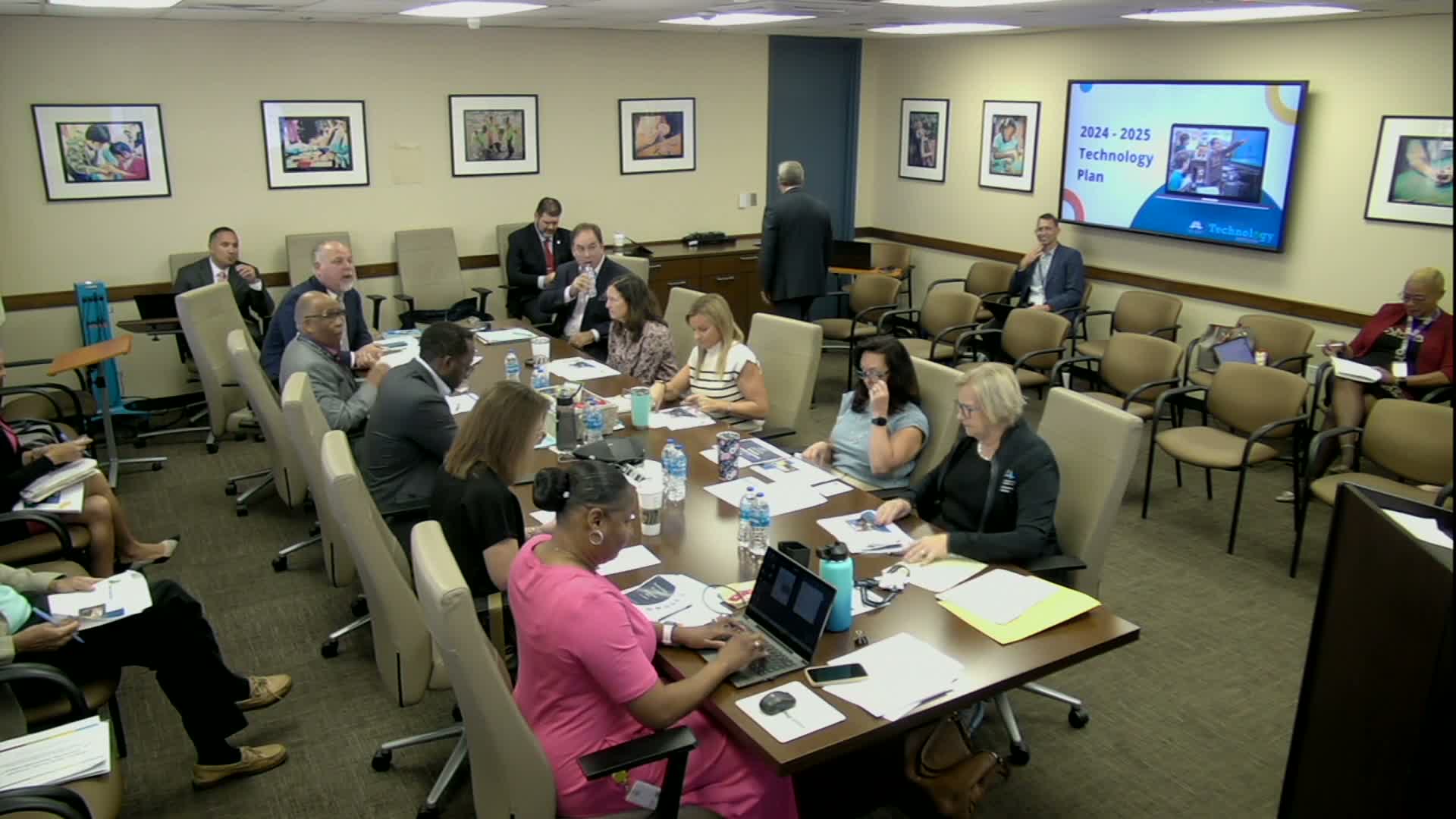
Jim Calderon and district technology staff briefed the Duval County School Board on Oct. 8 on a multi-year technology plan that includes enterprise software upgrades, network expansion and classroom hardware.
Calderon said the district completed a yearlong upgrade to SAP S/4 and moved to SAP RISE to standardize enterprise resource planning and reduce custom code. "We were the first public sector district to move to SAP RISE," he said, and the roadmap includes SuccessFactors for HR and subsequent financial and logistics modules.
On infrastructure, Calderon described a federal grant-funded dark-fiber build he said was roughly a $30 million project to create a backbone across the county and increase core capacity from 1 gigabit to 100 gigabits. He told trustees the recurring cost for the network will be about $88,000 annually, down from prior connectivity costs.
Classroom and engagement updates included a district move to Newline interactive monitors, wireless document cameras and a mobile broadcast cart for morning announcements; the district is also piloting Minecraft labs and esports programs. Calderon said the district is adopting Apogee to unify websites, the app, teacher-parent messaging and translation, and that some teacher-student messages will be retained as public records where required.
Calderon highlighted procurement savings: consolidating copier/toner contracts reduced costs from about $4 million to $1.8 million annually. He also described staffing and device support levels (about 57 technicians, 14 service-desk staff; roughly 200,000 devices supported) and said federal ESSER/ECF and ULTRA grants fund device distribution and innovation programs.
Trustees and staff discussed AI use in classrooms and the need for policy "guide rails". Calderon said the district is developing policies to govern classroom AI tools and to train staff on adoption and monitoring.
The board asked follow-up questions about training, adoption in new schools and translation services; staff said live-translation devices and multilingual website features will expand access for families.