Get Full Government Meeting Transcripts, Videos, & Alerts Forever!
Get email alerts on the Closed School Marker topic
No spam. Unsubscribe anytime.
District adds historical-marker process for closed schools, limits use of general funds
Summary
Duval staff proposed a seven-member committee (including Jacksonville Historical Society and city council reps) to recommend commemorative markers for closed schools within one year of sale or disposition; committee may propose funding from sale proceeds, grants or partner organizations, but board members insisted operational/general funds not be used.
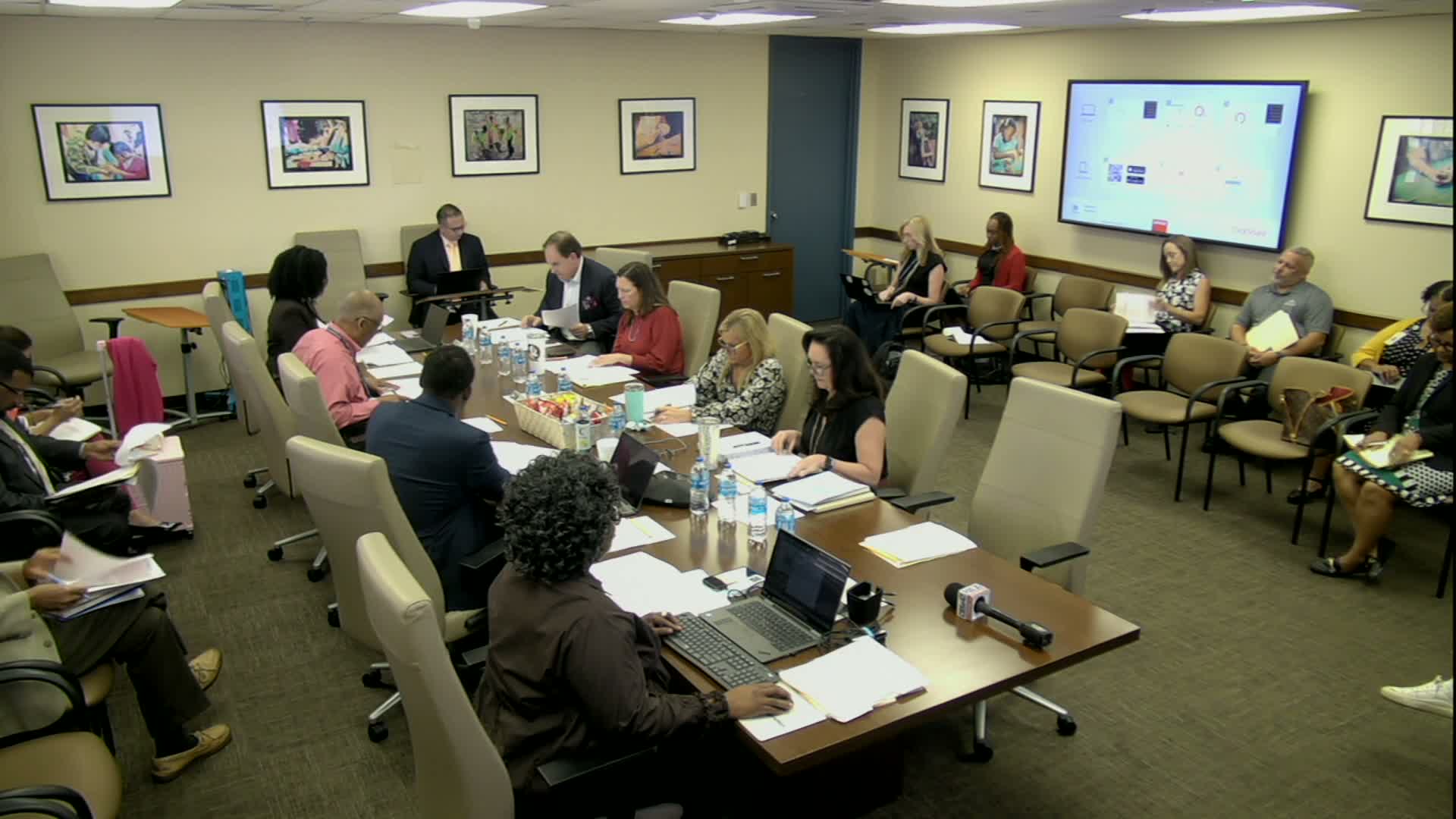
The Duval County School District’s policy review committee endorsed draft language to create a process for commemorating closed schools, directing the superintendent to convene a stakeholder committee to recommend historical markers and how to maintain them.
Staff said the committee — limited to about seven members — would include the Jacksonville Historical Society as a mandatory member, the principal of the closed school (if appropriate), family descendants tied to the school’s namesake, and a city council representative for the impacted district. The superintendent would oversee the process, gather cost and maintenance recommendations from the committee, and then present a packaged recommendation to the board for an up-or-down vote.
The policy language was deliberately broad about funding sources: staff recommended allowing a mix of funding streams including proceeds from a school sale, grants, historical-society contributions or city council funds. Several board members insisted the policy explicitly prohibit using the district’s general or operational funds for marker installation and upkeep; staff agreed to add language carving out that only proceeds from the property sale, foundation accounts, grants or partner contributions would be used for marker costs.
Board members also discussed placing a marker on public right-of-way if a purchaser cannot accommodate it on-site, and asked staff to enumerate specific funding caveats in the next draft to avoid confusing language. The updated policy will be noticed for public comment and return to the board in January for action.