Get Full Government Meeting Transcripts, Videos, & Alerts Forever!
Get email alerts on the Magnet Transportation Sunset topic
No spam. Unsubscribe anytime.
Duval County superintendent proposes sunsetting magnet-school transportation to save $12M–$15M
Summary
The Duval County School Board heard a recommendation from Superintendent Dr. Vernier to phase out magnet-school transportation beginning the 2026–27 school year as a multiyear cost‑saving measure; board members pressed for per‑school cost data, scholarship funding sources and equity safeguards before any operational change.
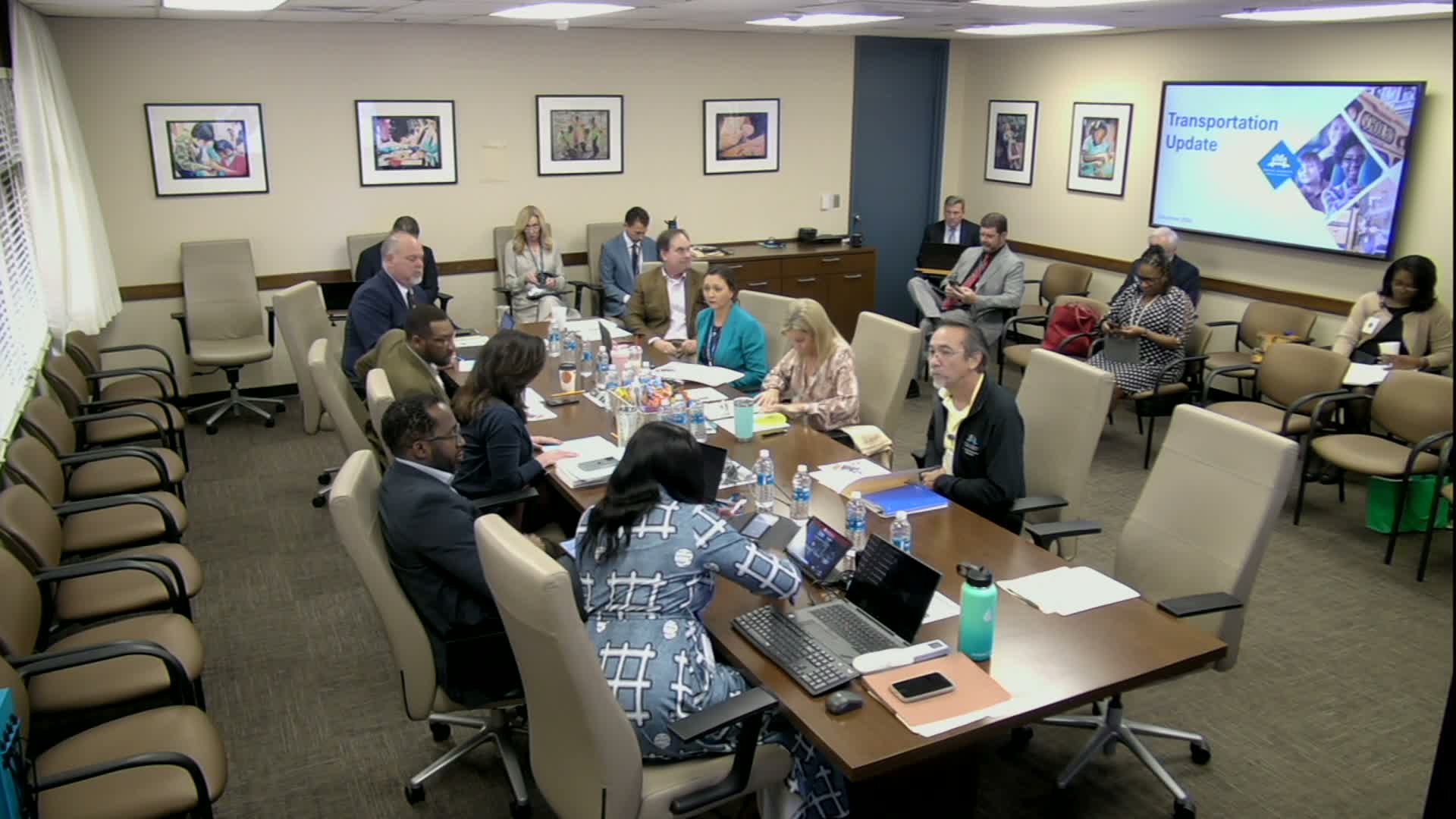
Duval County School Board members on the dais on an unspecified date heard a transportation update in which Superintendent Dr. Vernier recommended sunsetting district-funded magnet-school transportation beginning with the 2026–27 school year to reduce a projected budget shortfall. "Our recommendation at this point for your consideration is that we would like to sunset transportation beginning the 2026–27 school year," Dr. Vernier said.
The recommendation is one of three options staff presented earlier in a follow-up to a November discussion. Staff cited estimated savings of up to $4 million for eliminating some elementary magnet routes, up to $8 million for eliminating all secondary magnet routes and roughly $12 million–$15 million for eliminating all magnet transportation. "To eliminate all magnet transportation for the cost savings of $12,000,000 to $15,000,000," Dr. Vernier said when board members pressed for which option was recommended.
Why it matters: transportation represents a measurable share of district expenses and, staff said, has been flagged by the district's audit advisory committee as an outlier compared with peer districts. Board members warned that removing transportation could reduce access to magnet programs for families without reliable private transit and could prompt some families to choose other school options, with attendant effects on funding tied to enrollment.
What staff presented: Michayda Ferguson, the district's director of transportation (as identified in the meeting), outlined service differences that drive costs, including ESE (exceptional student) routes that pick up students door-to-door, require monitors and specialized equipment, and serve roughly 61 sites across the district. Ferguson said roughly 34% of enrolled students ride buses districtwide, about 7% are magnet riders (roughly 7,000 students) and ESE riders account for about 3% of enrolled students. A district presenter gave average per-student transportation figures: approximately $1,107.20 per general-education bus rider, about $2,234 per magnet student and about $6,807.89 per ESE student.
Scholarship mechanics and money flow: Ferguson told the board that Family Empowerment Scholarship awards are paid directly to families; those funds do not pass through the district to pay for district-provided transportation. Board members asked staff to "bring back" a definitive explanation of where scholarship dollars originate and whether scholarship use would, in practice, be charged against district accounts.
Board concerns and alternatives: members proposed a range of mitigation ideas if staff advanced a sunset recommendation: phased approaches by geography, targeted surveys of magnet parents to gauge willingness to provide their own transport, partnerships with the Jacksonville Transportation Authority (JTA), and moving certain magnet programs into neighborhood schools. Several members urged town halls and stronger messaging so families understand what would change and what help might be available. One board member warned that magnet transportation historically functioned as a marketing tool to retain and attract students.
Operational and financial constraints: staff and the superintendent emphasized that standing up an in-house fleet would require capital for vehicles (a figure cited in discussion was roughly $175,000 per bus as an example), facilities, maintenance teams and drivers. Given the district's budget shortfall, staff said the district lacks the upfront funds to buy a fleet immediately and that potential savings from in-house operation would not materialize until years into the future.
Next steps: the superintendent and staff agreed to return with several items: a historic timeline documenting when magnet transportation was provided, removed and reinstated; per-magnet and per-grade cost breakdowns (top 10 magnets and their costs); a definitive description of the Family Empowerment Scholarship funding source and mechanics; and options for phased in-house service. Town halls and surveys were planned for community feedback. No formal board action was taken during this meeting; the superintendent framed the recommendation as an operational proposal to be followed by additional analysis and community engagement.
Community impact and outlook: board members and staff repeatedly framed the issue as a trade-off between near-term budget balancing and long-term access and equity. The district will gather the requested data and use town halls to test possible mitigations before any operational change is implemented.