Get Full Government Meeting Transcripts, Videos, & Alerts Forever!
Get email alerts on the Municipal Code Enforcement topic
No spam. Unsubscribe anytime.
Caldwell County tabled ordinance to authorize volunteers to remove illegal ‘bandit’ signs amid liability questions
Summary
Court reviewed a proposed ordinance authorizing trained volunteers to remove illegal signs from public rights-of-way but tabled the measure after commissioners raised liability, training and enforcement questions.
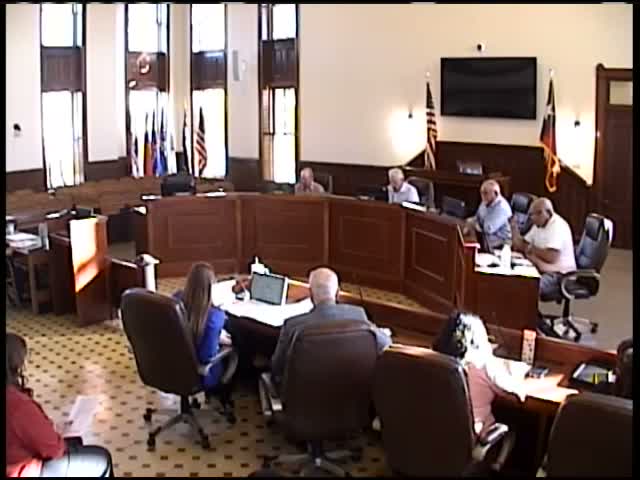
Caldwell County commissioners on Oct. 22 reviewed a proposed ordinance that would allow trained community volunteers to assist in removing illegal temporary signs (commonly called “bandit” signs) from public rights-of-way, but they agreed to table the proposal to gather more information about training, liability and enforcement procedures.
Commissioner Thomas presented the ordinance, noting the measure builds on state statute and would authorize volunteers to confiscate and discard illegally placed signs on utility poles, traffic signs and other public rights-of-way. Presentation slides described a low-cost, possibly virtual training model and identified required volunteer acknowledgements, including assumption of risk and a release of county liability.
Several commissioners asked how the volunteer program would work in practice. The judge and others pressed whether volunteers could be held financially liable if they mistakenly removed a sign placed legally on private property, and whether the county could be required to defend or reimburse volunteers. Commissioner Thomas said certified volunteers would assume liability, but commissioners said that answer was insufficient without legal clarification. The judge also noted that criminal penalties in the draft ordinance (up to $500) imply enforcement by a constable or sheriff, not volunteers.
Commissioners proposed tabling the ordinance so staff can answer specific questions about training costs, insurance or indemnity arrangements, and enforcement protocols. The motion to table passed by voice vote; the court requested staff return with answers and potential amendments at a future meeting.