Get Full Government Meeting Transcripts, Videos, & Alerts Forever!
Get email alerts on the Transportation Infrastructure topic
No spam. Unsubscribe anytime.
Caldwell County weighs a multiyear transportation capital plan and whether to put a bond before voters
Summary
County consultants presented a long list of transportation and safety projects, estimated in the hundreds of millions, and reported that public outreach showed substantial interest in infrastructure; commissioners directed staff to produce a prioritized list and hold a July 18 workshop to prepare for a possible bond vote this fall.
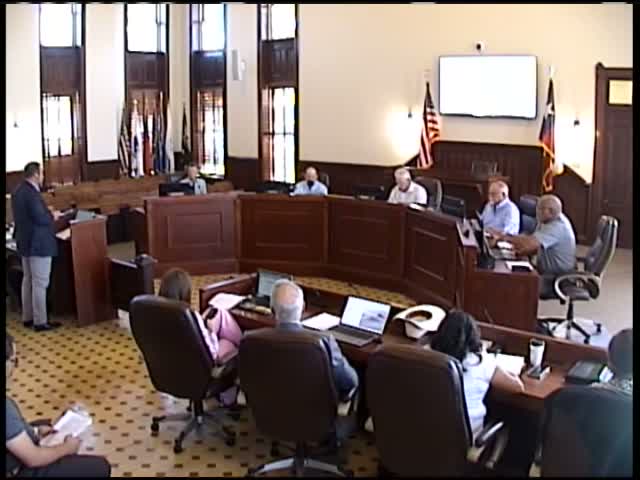
Caldwell County commissioners on July 9 heard a presentation from American Structure Point and Gap Strategies outlining a proposed capital improvement program (CIP) that officials say reflects two rounds of public outreach and stakeholder meetings across the county.
Will Connolly, a principal with American Structure Point, told the court the CIP is a multi-decade planning tool to guide investments in mobility, safety and economic development as the Austin–San Antonio region grows. "This is saying, OK, here are the plans that we have overall for the county looking over the 20, 40 year horizon," Connolly said. He said stakeholders and more than 30 meetings informed the list.
Senior project manager Steve Wodock ran through highway, local roadway and safety projects the consultants identified, including corridor and schematic work on West San Antonio Street in Lockhart (a corridor study estimated at about $41 million), Orchard Drive/Orchard Loop improvements (about $46 million), a Luling truck bypass (about $26 million), multiple realignments and turn-lane projects, a top-four bridge replacement package (about $20 million) and several low-water crossing fixes (about $15 million). Wodock said some state highway segments would require schematic and environmental work before they could be advanced for state financing; construction for large state segments was estimated in the hundreds of millions.
Consultants summarized public outreach results, reporting nearly 5,000 online views, more than 2,000 completed online entries and about 122 formal written comments. Connolly said roughly half of respondents prioritized investments in infrastructure and roads, and a majority indicated they would support tax-rate increases or bond measures for those improvements.
County leaders discussed schedule constraints for a November ballot: the deadline the consultants gave for putting a transportation bond before voters is Aug. 19. Judge Hayden and commissioners tentatively scheduled a workshop on July 18 to review a compressed, prioritized project list and agreed to revisit priorities at the July 23 and Aug. 13 regular meetings to allow time for any election action.
The court voted to direct the county judge's office and consultants to prepare a prioritized list, cost estimates and a draft financial plan for the July 18 workshop. "If this court desires to call for an election and give your citizens the opportunity to vote on a transportation bond, you have until Aug. 19 to do that," Connolly said.
Next steps: consultants will produce a compressed recommendation for the court to consider at a workshop July 18 and again at the regular session on July 23; the court must formally vote to place any bond question on the November ballot before the Aug. 19 deadline.