Get Full Government Meeting Transcripts, Videos, & Alerts Forever!
Get email alerts on the Annual Audit topic
No spam. Unsubscribe anytime.
Barnegat board hears audit with unmodified opinions, later approves annual audit after brief tabling
Summary
Auditors gave the district an unmodified opinion and flagged a repeat low-level finding about excess cash in the food-service fund; the board temporarily tabled the audit but later approved the 2023–24 annual audit by roll call.
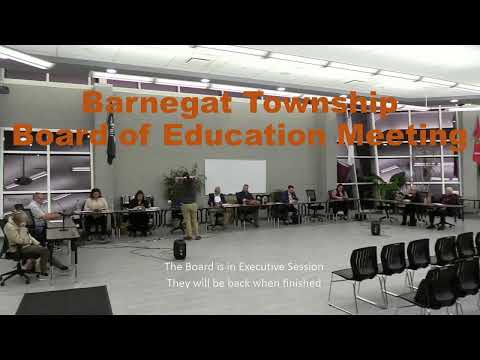
The Barnegat Township Board of Education received its annual audit presentation and ultimately approved the 2023–24 audit after tabling it for further discussion earlier in the meeting.
Brian Waldron, a partner with Holman, Farina and Allison, told the board the firm issued “an unmodified opinion,” the strongest auditor conclusion, for the district’s financial statements and for internal-control and compliance testing. He said the district also triggered a single-audit review of federal and state programs because it expended more than the federal threshold for major programs.
Waldron identified one repeat, low-level finding: the food-service fund was holding excess net cash resources relative to state guidance, a legacy of pandemic-era funding and program shifts. He said the finance committee and business office have plans to use those funds (for example, cafeteria equipment) and called the issue a management-level item: “we do have that,” he said, characterizing it as a formality and a repeat comment from prior years.
Board members paused the audit for further discussion earlier in the meeting; a motion to table the annual-audit item passed on roll call. After additional committee work and follow-up, the board later voted to approve the audit for the 2023–24 year. The approval vote carried on roll call, completing the annual audit process.
The audit presentation also included financial metrics: Waldron reported roughly $7.3 million in total fund balances at June 30, 2024 (about $9.8 million including late state-aid receipts) and a year-over-year decrease of roughly $470,000. He told the board those reserve levels fall within typical guidance (roughly 10–30% of the operating budget) and that the district’s overall position was sound.
The board’s next steps, as discussed in the meeting, include following the business administrator’s planned uses of excess food-service funds and monitoring any recommended corrective actions in the audit management report. The auditor made final reports available to district leadership and offered to answer follow-up questions.