Get Full Government Meeting Transcripts, Videos, & Alerts Forever!
Get email alerts on the Municipal Governance topic
No spam. Unsubscribe anytime.
Plaistow selectmen debate pausing town 'tagging' sign-up; motion to suspend policy fails
Summary
The Plaistow Board of Selectmen discussed whether to suspend the town—s informal "tagging" (solicitation/collection) permission process for one year. A motion to pause the policy failed after members split on whether the town—s letter prevents conflicts or whether stores should control access.
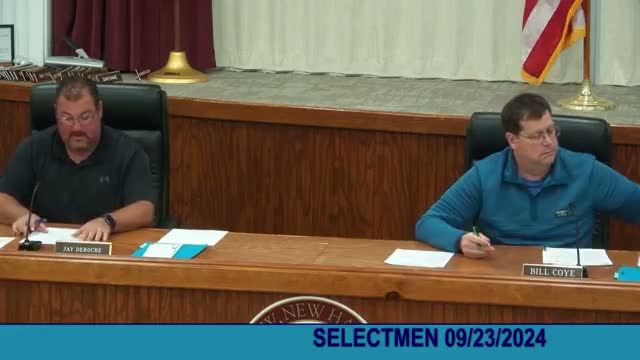
A motion to suspend Plaistow—s informal "tagging" registration process for one year failed at the Board of Selectmen meeting on Sept. 23 after a divided discussion about who should control permission for groups soliciting outside local businesses.
Beth, who handles tagging approvals for the town, told the board there is no written policy and that she maintains a calendar and issues letters to organizations that request permission. "My concern is, supposedly, anytime somebody is canning or tagging, they have BOS approval, but I approve them," she said, describing the current practice of issuing a town letter to organizations and providing a calendar entry for the dates requested.
Some selectmen argued the town—s role prevents conflicts and a "free-for-all" should be avoided. One member said the town's letter gives groups a clear claim to a date, which reduces disputes when multiple organizations request the same weekend. Another asked whether removing the town letter could lead to "turf wars" between groups seeking popular dates.
Other members favored removing the town—s involvement and letting individual businesses manage who solicits in front of their property. As one selectman put it, "It—s their property," and if stores choose to allow or deny taggers, the town's paperwork may not be necessary.
Selectman discussion also noted practical limits in the current system: Beth said the process operates on a first-come, first-served calendar and that since COVID requests have slowed to roughly 10–12 organizations in each season. A proposal from one board member would have paused the town process for one year beginning Oct. 1, requiring organizations to obtain business permission directly.
Selectman motioned to suspend the tagging process for a year (the motion was made and seconded). After brief discussion and a call for voice votes, the motion failed on the floor; the board decided to keep the existing process in place for now. The chair suggested staff notify groups who previously registered about the board—s decision and that organizations should continue to work directly with businesses.
The issue was discussed at length but produced no ordinance or written policy change; the board retained the town—s current practice of providing authorization letters and maintaining a calendar.
What's next: The town will continue its current practice and Beth said she will notify organizations of the decision. The board did not set a schedule to reexamine the policy in the public record.