Get Full Government Meeting Transcripts, Videos, & Alerts Forever!
Get email alerts on the Assessment topic
No spam. Unsubscribe anytime.
Gravette School District presents first-year ATLAS results, outlines targeted interventions
Summary
District administrators briefed the board on the new ATLAS state assessment, reporting regional rankings, areas of strength such as geometry and opinion writing, and gaps in reading conventions and specific math strands. Staff described next steps including interim assessments, grade-level PLC work and Tier 3 individual reading plans for flagged students.
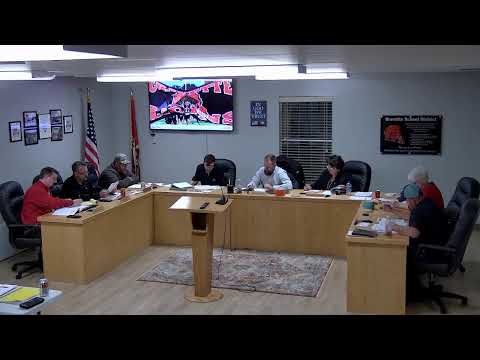
Administrators and district staff presented the Gravette School District's first-year results from the ATLAS state assessment and told the school board on Monday that the new test gives more detailed, standard-by-standard information than the previous ACT Aspire instrument.
"This assessment actually breaks it down by standard," said Dr. Merritt, a district administrator, describing how ATLAS enables vertical, grade-to-grade comparisons and standard-level analysis that the district has not previously had. Staff said the data lets them see whether skills taught in one grade are feeding into the next.
District presenters said areas of relative strength included geometry and collaborative/opinion writing, and they reported that some grade levels showed clear growth. At the same time, staff flagged weaknesses in reading conventions and specific math strands such as multiplication and division strategies.
"When you look at 3rd through 8th grade ... the combined percentage of students that are at or above grade level is what we're watching," an administrator said. In one slide discussed with the board, a presenter observed that about 63.5% of students were proficient or better on a combined measure used in the report.
Staff emphasized that the test is new and that percentages are not directly comparable to prior years' results because the assessments measure achievement differently. "We're talking about two different tests," a presenter said, asking board members to interpret year-to-year shifts with caution while noting that regional ranking did improve in some areas.
Board members pressed for clarity on how the district will use the data. Administrators outlined a multi-tiered response: principals and teachers will use interim ATLAS assessments during the year for more frequent progress checks; grade-level professional learning communities (PLCs) will examine standard-by-standard results; and the district's Tier 3 intervention team will create individualized reading plans for students flagged as at risk.
Dr. Merritt described how the district would use the ATLAS classroom assessment tool and interim items to generate targeted practice questions aligned to specific standards and depth-of-knowledge levels. "It gives them a temperature check," she said, describing how teachers can see whether instruction is moving students toward proficiency.
Board members encouraged staff to return with implementation requests as interventions are developed. "Be sure and hold us honest to how we can support you," one board member said, signaling willingness to consider resource or policy changes if data-driven interventions require them.
The district said it will correct presentation errors in the packet and return updated, ranked reports to the board. The board took no separate vote on curriculum changes at the meeting; administrators said the ATLAS results will inform ongoing instructional planning and future agenda items.