Lifetime Citizen Portal Access — AI Briefings, Alerts & Unlimited Follows
House tourism committee hears allegations that Camarero pressured racetrack agents to use its sports-betting provider
Loading...
Summary
Witnesses told the Puerto Rico House committee that Camarero Registrac Corp. sent letters warning agents their independent contracts or licenses might not be renewed unless they adopted Camarero’s chosen sports-betting supplier; the Commission of Games said it can intervene and the Department of Justice has opened an antitrust inquiry.
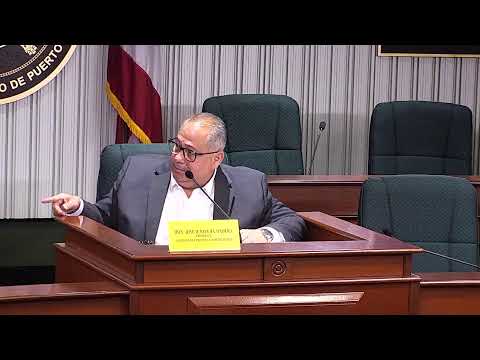
The House Tourism and Cooperativism Committee on June 12 held a public hearing on Resolution R. de la C. 1160 after testimony that Camarero Registrac Corp. pressured independent racetrack agents to accept the operator’s chosen sports-betting provider.
Gabriel Salgado Torres, president of Agentes Hípicos Unidos de Puerto Rico, told the committee his group — which he said represents roughly 98% of horse-betting sales — has received multiple letters from Camarero warning that some contractors’ agreements would not be renewed if they did not adopt Camarero’s provider. Salgado said five agents so far reported receiving such communications and described the letters as threatening to the survival of small businesses and family livelihoods.
Representing Apuesta PR, lawyer Graciani Betancourt Pérez accused Camarero of using its position as the island’s sole licensed racetrack operator to coerce agents and foreclose competition. Graciani said Apuesta PR copied a cease-and-desist-style communication to the Division of Monopolistic Affairs at the Department of Justice and asked regulators to investigate whether Camarero’s conduct amounts to unlawful interference with contracts and anticompetitive practices.
Juan Carlos Santaella Marchán, interim executive director of the Comisión de Juegos del Gobierno de Puerto Rico, laid out the legal framework governing hipismo and sports betting, citing Ley 81 (2019) and Ley 83 (1987) and relevant regulations. Santaella said the commission has the statutory authority to supervise licensure and may, under regulation, issue or maintain an agent’s license even if an operator with a commercial contract objects; however, he noted the commission had not received a formal administrative complaint that would trigger a mature sanctioning process.
Santaella confirmed he had been made aware of letters circulated by Camarero and said Apuesta PR’s communication to Justice prompted investigatory steps by the antimonopoly division. He told the committee the commission could act motu proprio but that issuing an official clarifying letter expressing the commission’s position — which he expected to publish within days — would provide useful administrative record for any later legal proceedings.
Lawmakers pressed the commission for data on the number of licensed agencies and on fiscal flows tied to electronic gaming; Santaella said the commission audits Camarero’s electronic-video gaming system and provided a 2023 figure of about $67 million in revenue from those systems. Representatives asked the commission to supply a five‑year count of agencies; Santaella agreed to provide the requested figures within five days.
Committee leadership also signaled possible next steps for the legislature: the committee reserved the right to summon Camarero by formal citation and warned it would consider contempt proceedings if the company failed to comply with a summons. The chair said the commission’s legal counsel would confer and indicated a decision on citation could be made within 48 hours.
The hearing closed with committee members reiterating that any private contract is subordinate to statute and that the committee’s role is oversight of compliance with the law, not intervening in ordinary private contract terms. The commission and Justice Department investigations were left open; the commission said it will issue an official clarifying letter and the Department of Justice’s antitrust division is examining the matter.