Get Full Government Meeting Transcripts, Videos, & Alerts Forever!
Get email alerts on the House Bill 1292 topic
No spam. Unsubscribe anytime.
Agencies tell House committee municipalities are first responders for shelters but execution gaps persist; agencies to propose edits
Summary
During a June 20 hearing on House Bill 1292, ENEMIAT, Housing, Education, OGP and fiscal overseers agreed municipalities play the primary role in shelter activation but highlighted execution shortfalls (delays in state resources, missing custodial arrangements, staffing limits). Agencies agreed to submit technical and administrative language to the committee.
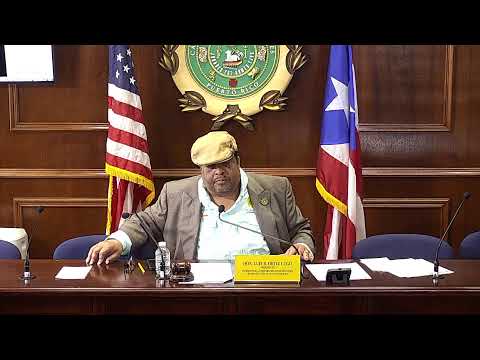
The Commission for Preparedness, Reconstruction and Reorganization before an Emergency convened June 20 to consider House Project 1292, a proposal to clarify that municipal emergency offices are responsible for opening and operating shelters and to require state agencies to coordinate at a municipality's request.
Lic. Miguel Candelario Pif1eiro, appearing for the Department of Public Safety and the Negociado de Manejo de Emergencias y Administracif3n de Desastres (ENEMIAT), summarized the statebfs multi-phase emergency framework and stressed that municipalities are "the first line of response" with authority to approve and operate local plans that ENEMIAT reviews. ENEMIAT noted that municipalities prepare their own emergency plans and that ENEMIATbf s role is review and coordination under federal guidance such as the National Response Framework.
Department of Education representatives told the committee the agency maintains a roster of schools identified as potential shelters and recommended that municipal emergency offices keep custody of the keys for those identified facilities to speed openings. Department of Housing counsel Pedro Cintrf3n said the agency has an interagency coordinator and staff that operate shelters and has used prequalified contracts (via administration of general services) to secure food and other services after earthquakes.
Committee members pressed agencies on deployment delays in past events. Chair Luis R Ortiz Lugo recounted occasions where state resources arrived "al quinto, sexto, se9ptimo deda" after an event and asked agencies for concrete administrative fixes. Fiscal authorities (OGP, the fiscal oversight agency AFAF) cautioned any transfer of responsibilities to municipalities without matching resources could create unfunded mandates and asked to be consulted on fiscal impacts. AFAF's representative urged that any shift be revenue-neutral or accompanied by a fiscal impact assessment.
Why it matters: the bill seeks to formalize operational practice and remove confusion over who is responsible to open shelters. Agencies and committee members agreed on the objective but differed on whether the existing statutory framework or administrative changes would be sufficient to close the execution gap.
Next steps: the chair asked agencies to submit specific language or administrative changes within two business days so the committee can evaluate practical amendments rather than only theoretical changes.