Get Full Government Meeting Transcripts, Videos, & Alerts Forever!
Get email alerts on the Senate Bill 1360 topic
No spam. Unsubscribe anytime.
Agencies split on draft that would expand municipal role in 911 call distribution; negotiado says 59 municipalities integrated
Summary
In a June 20 hearing on Senate Bill 1360, the Department of Public Safety recommended against the bill as drafted, citing federal and technical constraints, while the Negociado del Sistema de Emergencias 911 said 59 municipalities are integrated, two more are in process, and described the staffing and technical requirements for municipalities to receive 911 calls.
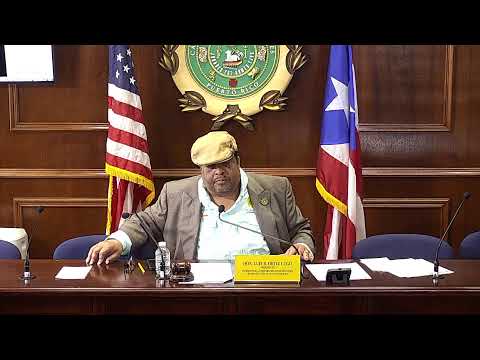
The House committee heard competing views June 20 on Senate Bill 1360, a proposal to amend the law that governs the Puerto Rico Department of Public Safety to clarify municipal participation in the 911 call-receipt and distribution system.
Lic. Omar Arias Nieves, appearing for the Department of Public Safety (DPS), told the committee the current statutory and regulatory framework already contemplates municipal integration but warned the draft could create an automatic entitlement to receive 911 calls without necessary safeguards. "Por ende, en el departamento de seguridad pfablica no favorecemos la aprobacif3n del proyecto de senado trece sesenta, segfan redactado al presente," DPS counsel said on the record.
Officials from the Negociado del Sistema de Emergencias 911 said the negotiado supports the objective of having all 78 municipalities integrated but stressed that technical and operational conditions must be met before a municipality can receive calls directly. A negotiado representative reported: "Hemos logrado llegar a cincuenta y nueve, dos en camino para sesenta y uno, pero faltan diecisiete." The negotiado also listed requirements for integration: 24/7 staffing metrics (dispatchers + support based on population ratios), two exclusive 10-digit telephone lines, a Computer Aided Dispatch (CAD) system (CAT) with a dedicated high-speed internet connection (the transcript records a minimum capacity discussed as 5 Mbps), and submission of required SE911 forms.
Funding and timing were central points of discussion. Negotiado officials described a funding mechanism that historically allocates roughly 25% of the negotiadobf s budget to pay municipalities for call handling (the negotiado referenced an approximate pool of $5 million and a historical minimum payment figure near $20,000 for small municipalities). Committee members and agency officials debated whether a 90-day compliance window would be realistic; negotiado staff said they could provide technical cooperation, including equipment loans and training, but audits and fiscal-year accounting conditions limit the immediate distribution of funds until audited financial statements are complete.
Why it matters: the bill would change how emergency calls are routed and how responsibility is shared between the Negociado 911 and municipal emergency offices. Proponents argue local integration can reduce response times; DPS counseled care to ensure compliance with federal regulations and funding oversight.
What happened next: the chair asked agencies to propose concrete language adjustments; no formal committee vote on the bill was recorded during the session.